Discover how contract management software boosts efficiency, reduces risk, and streamlines business operations across industries.
Core advantages of contract management software for business
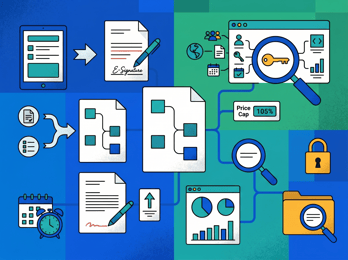
Contract management software has become indispensable for organizations aiming to streamline operations and reduce risk. By centralizing contracts into a secure, cloud-based system, businesses eliminate reliance on paper files and cumbersome spreadsheets, gaining instant access to documents organization-wide. This transparency leads to faster locating and updating of agreements, stronger version control, and automated alerting for key milestones or renewal dates. Industry-leading solutions, such as ContractSafe, incorporate AI-driven search and categorization to further reduce administrative effort. Automated reminders and e-signatures help accelerate review cycles and speed up deal closure, leading to improved bottom lines. Strong user permissions and detailed audit trails provide vital security, ensuring sensitive information stays protected. For teams eyeing growth, scalability in user access and archive limits removes friction and supports collaborative work. Check out these best practices for 2025 before making your selection.
Choosing features and integrations for your organization
When evaluating contract management software, organizations must assess their current workflow challenges and future needs. Key features to look for include secure digital storage, customizable workflows, robust audit trails, automated alerts for deadlines, and seamless e-signature integration. Solutions like ContractSafe, for example, emphasize intuitive design and scalability, making them ideal for growing businesses of any size. Integration capabilities with leading cloud storage services and existing CRMs allow for a smoother transition and prevent process silos. Moreover, transparent user permissions, compliant with regulations such as SOC2 and HIPAA, should be prioritized to ensure only authorized staff access sensitive information. Consider platforms that offer unlimited users for flat, predictable pricing, which drives collaborative work across departments and fuels organizational growth. Learn what makes a system best-in-class.
Measuring ROI, compliance, and ongoing contract improvement
After implementation, it is critical to establish measurable benchmarks. Key performance indicators may include time saved on contract creation and approval workflows, a reduction in missed deadlines due to automated reminders, and fewer compliance incidents or disputes from integrated version control. Organizations should also assess qualitative feedback from users, particularly regarding ease of use, support responsiveness, and data security. Reviewing compliance requirements, such as GDPR or HIPAA, aligned with features that ensure auditability, is a must in regulated fields like healthcare or finance. ROI should be calculated based on time and cost savings, risk mitigation, and improvements in contract renewal or renegotiation rates. For ongoing success, use analytics dashboards and regular feedback loops to continuously refine internal processes. For further insight, read this software readiness checklist.







.svg)







.svg)