
Disclaimer: This template is a starting point, not a substitute for legal advice. Always consult an attorney before finalizing any services agreement.
Hiring independent contractors can be great if your business needs extra help on a particular project or if you need to tap the expertise of a specialist you may not yet have on your team.
But navigating the legal side of these relationships can get tricky.
That's where an independent contractor agreement template comes in.
It provides a solid framework to clearly define the terms of your working relationship, protecting both you and the contractor. And with this template, you can customize an independent contractor agreement to meet your needs. Saved as a reusable contract template in ContractSafe, it's ready for the next contractor in minutes.
Ready to simplify your contractor management? ContractSafe can help you streamline the entire process, from creating and signing agreements to tracking deadlines and ensuring compliance.
Table of Contents
- What Is an Independent Contractor Agreement?
- When To Use an Independent Contractor Agreement
- What’s Included in the Agreement?
- Who Manages the Agreement?
- Challenges of Managing Independent Contractor Agreements
- How ContractSafe Can Help You Manage Your Independent Contractor Agreement
- How To Use the Template
- FAQ
What Is an Independent Contractor Agreement?
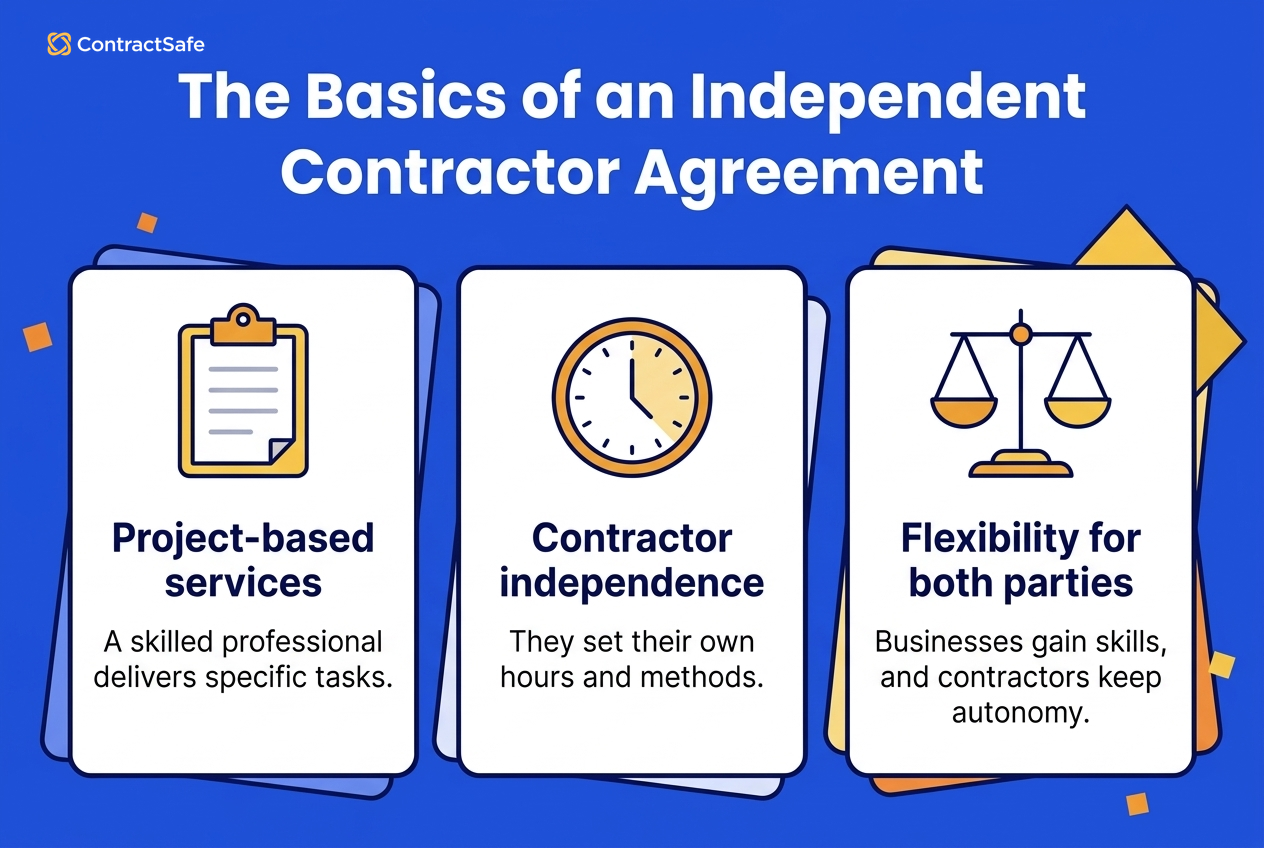
An independent contractor agreement is a type of contract that establishes a formal understanding between a business and a skilled professional who provides services on a project basis or for specific tasks.
Contractors are not employees; they work independently, set their own hours, and use their own tools and methods.
This arrangement offers flexibility for both parties: Businesses can access specialized skills without the overhead of hiring employees, while contractors enjoy autonomy and the ability to work with multiple clients.
When To Use an Independent Contractor Agreement
Whether you need extra hands during the busy season or an expert to set your marketing funnel straight, an independent contractor can help you bridge the gap between what you need and what you have.
Here's when to consider using an independent contractor agreement.
1. Project-Based Work
Independent contractors excel in situations where the work has a clear beginning and end. This makes them ideal for project-based work with defined scopes and deliverables.
Imagine your marketing team needs to develop a new mobile app to promote an upcoming product launch.
Instead of hiring a full-time app developer, you could engage an independent contractor specializing in mobile app development for the project's duration.
This allows you to:
- Access specialized skills: Bring in expert app developers without the long-term commitment of hiring an employee.
- Maintain flexibility: Scale your workforce up or down based on project needs.
- Control costs: Pay only for the services you need, avoiding the overhead associated with a full-time employee.
An independent contractor agreement in this scenario would clearly outline the project scope, timelines, deliverables, and payment terms.
2. Specialized Skills
Sometimes, your business requires specialized skills not readily available within your existing team. Independent contractors offer a way to bridge that gap without needing permanent staffing.
Let's say your small business wants to implement an AI-powered chatbot but lacks AI development expertise.
Hiring a contractor grants access to top talent without the cost of a full-time specialist, which might be overkill for a one-time project.
The independent contractor agreement would outline the specific tasks, deliverables, and performance expectations related to the AI project.
It would also address important considerations like data confidentiality and intellectual property rights.
3. Temporary Needs
Businesses often experience fluctuations in workload or staffing needs.
Independent contractors provide a flexible solution for temporary needs, such as seasonal demand, employee absences, or simply special short-term projects.
Maybe you’re running a manufacturing company and are faced with a sudden increase in orders. You could quickly onboard independent contractors to help with production or order fulfillment, ensuring they can meet customer demand without delays.
Or maybe you’re a retailer on the boardwalk of a lively beach town that gets packed in the summer. You could hire temporary workers to meet the demands of the increased volume of customers.
The independent contractor agreement would clearly define the duration of the temporary engagement, the specific tasks and responsibilities, and the payment terms.
4. Creative Fields
In creative industries, the gig economy is thriving. Independent contractors are the backbone of fields like writing, design, photography, and filmmaking.
This is quite common in marketing agencies, for example. They often hire freelance writers to create website content, blog posts, or social media updates.
They might also engage graphic designers for visual assets, photographers for product shoots, or videographers for marketing videos. For example, browser-based tools let freelance videographers edit videos online and deliver polished marketing clips without relying on heavy desktop software.
This approach offers:
- Diverse talent pool: Access a wide range of creative professionals with different styles and perspectives.
- Project-based flexibility: Easily scale creative resources up or down based on project needs.
- Fresh ideas: Bring in new talent to keep your creative output innovative and engaging.
Independent contractor agreements in creative fields often address copyright ownership, usage rights for the created content, and payment structures based on project milestones or deliverables.
5. Other Use Cases
The flexibility of independent contractor agreements makes them suitable for a wide range of other situations. Here are a few examples:
- Consultants: Businesses often hire independent consultants for strategic advice, business process improvement, or specialized expertise in finance, marketing, or human resources.
- Trainers: Companies might engage independent trainers to conduct workshops or training sessions for their employees on specific topics or skills.
- Researchers: You can hire independent researchers to gather data, conduct surveys, or analyze information for market research, product development, or other business purposes.
- Technical support: Companies might outsource technical support functions to independent contractors who can assist customers remotely.
- Legal Experts: Businesses may need specialized legal expertise for projects or situations, such as contract review, intellectual property advice, or litigation support. Hiring an independent legal contractor can provide access to this expertise as needed, offering cost-effectiveness and flexibility.
Ultimately, any situation where a business needs specialized skills or support for a specific period can benefit from the flexibility and clarity that an independent contractor agreement provides.
What’s Included in the Agreement?
To avoid any confusion down the road, you need a rock-solid independent contractor agreement.
Here's a breakdown of the key clauses to include.
- Parties: Identify the business hiring the contractor and the independent contractor themselves, including their full names, addresses, and contact information.
- Effective dates: Specify the contractual relationship's precise start and end date.
- Clarification of independent contractor status: Explicitly state that the individual is being hired as an independent contractor, not as an employee, outlining the distinctions between the two classifications.
- Scope of work: Provide a detailed description of the services the independent contractor will provide, including specific deliverables, deadlines for completion, and standards for evaluating performance.
- Payment terms: Outline the agreed-upon rate for the contractor's services, the payment schedule, and the procedures for invoicing and payment.
- Tax responsibility: Explain that the independent contractor is responsible for their own taxes, including self-employment taxes, and is not considered an employee for tax withholding purposes.
- Insurance: Specify any insurance requirements the contractor must meet, such as general liability insurance, professional liability insurance, or workers' compensation insurance.
- Intellectual property: Clearly define who owns the intellectual property rights to any work product created by the contractor during the project, typically assigning ownership to the hiring business. It may also address any licensing agreements or usage rights.
- Confidentiality: Protect sensitive business information that may be shared with the contractor, outlining the contractor's obligations to maintain confidentiality and restrict disclosure with a confidentiality clause.
- Termination: The agreement will set forth the conditions under which either party can terminate the contract, including the required notice periods and any potential fees or penalties associated with early termination.
- Dispute resolution: Summarize the process for resolving any disagreements or disputes between the business and the independent contractor, such as through mediation, arbitration, or legal action.
Including these clauses will ensure your independent contractor agreement provides a clear framework for the working relationship, protecting the interests of both parties and minimizing the potential for misunderstandings or conflicts.
Who Manages an Independent Contractor Agreement?
Managing independent contractor agreements isn't a solo job. It often involves a team effort across different departments.
Here's who typically plays a role.
- HR/legal: The human resources or legal department plays a crucial role in drafting the initial independent contractor agreement, ensuring it is legally sound and compliant with all applicable laws and regulations. They also review the agreement for potential risks and liabilities.
- Procurement: The procurement department is often responsible for selecting and evaluating potential independent contractors. They negotiate the terms of the agreement, including rates and payment schedules, and manage the ongoing relationships with contractors.
- Project managers: Project managers oversee the independent contractor's day-to-day work, monitoring their progress, providing feedback, and ensuring that deliverables are met according to the agreed-upon timeline and quality standards.
- Finance: The finance department processes invoices and ensures timely payments to the independent contractor according to the agreed-upon payment terms. They may also track expenses related to the contractor's services.
Clearly defining roles and responsibilities will help your businesses ensure effective oversight and management of independent contractor agreements, promoting smooth working relationships and minimizing potential risks or conflicts.
Challenges of Managing Independent Contractor Agreements
While independent contractors offer many advantages, managing those relationships can come with its own set of hurdles.
Let's explore some common challenges.
Misclassification Risks
One of the biggest pitfalls when working with independent contractors is the risk of misclassification. This occurs when a business treats an individual like an employee (controlling their work hours, providing tools and equipment, etc.) but classifies them as an independent contractor for tax and legal purposes.
Misclassification can trigger audits from tax authorities (like the IRS) and labor departments, leading to hefty fines, back taxes, and penalties.
Misclassified workers may file claims for unpaid overtime, benefits (like health insurance), or workers' compensation, resulting in costly legal battles.
Misclassification can tarnish a company's reputation and erode trust with contractors and employees.
How to avoid misclassification:
- Understand the legal distinctions: Familiarize yourself with the criteria used by the IRS and your state to determine worker classification.
- Structure the relationship correctly: Ensure the contractor controls their work, uses their tools, and operates independently.
- Use a clear independent contractor agreement: A well-drafted agreement clarifies the nature of the relationship and helps establish boundaries.
- Consult with legal counsel: If you're unsure about classification, seek guidance from an employment lawyer.
Misclassification is a serious issue, but it's not the only challenge. Let's move on to another common pitfall: ambiguous contract terms.
Ambiguous Terms
Vague or ambiguous language in an independent contractor agreement is a recipe for disagreements.
If the contract doesn't clearly define the scope of the work, it can lead to "scope creep," where the contractor takes on additional tasks outside the initial agreement, leading to disputes over payment.
Similarly, a lack of clarity on payment rates, invoicing procedures, deadlines, and expense reimbursement can create frustration and payment delays.
How to avoid ambiguous terms:
- Be specific and detailed: Clearly define the scope of work, deliverables, timelines, payment terms, and other key aspects of the agreement.
- Use clear and concise language: Avoid jargon or technical terms that might be open to interpretation.
- Get legal review: Have an attorney review the agreement to ensure it's legally sound and free of ambiguities.
Clear communication and precise language are key to avoiding these kinds of disputes. But even with a solid contract, there can be challenges regarding payment.
Delayed Payments
Late payments can seriously strain the relationship between a business and an independent contractor.
Independent contractors often rely on consistent and timely payments to manage their cash flow and business expenses. Delays can disrupt their operations and create financial difficulties.
Late payments can even breach the contract and give the contractor grounds to pursue legal action.
How to ensure timely payments:
- Establish clear payment terms: Specify the agreement's payment schedule, invoicing requirements, and payment methods.
- Streamline invoice processing: Implement efficient processes for reviewing and approving invoices.
- Use electronic payment methods: Expedite payments through online platforms or direct deposit.
- Communicate proactively: If a payment delay is unavoidable, inform the contractor promptly and provide an updated payment timeline.
Timely payments are essential for a healthy working relationship. Now, let's focus on another critical aspect: tracking deliverables.
Tracking Deliverables
In project-based engagements, effectively tracking deliverables and ensuring they meet expectations is vital for success.
Scope creep, as mentioned earlier, can lead to missed deadlines and budget overruns.
Without clear mechanisms for quality control, the work produced might not meet the required standards, leading to rework and delays.
Poor communication can also cause misunderstandings about project expectations and timelines.
How to effectively track deliverables:
- Set clear milestones: Break down the project into smaller milestones with specific deliverables and deadlines.
- Use project management tools: Employ software or platforms to track progress, manage tasks, and facilitate communication.
- Regularly review progress: Conduct regular check-ins with the contractor to discuss progress, address any issues, and provide feedback.
- Document everything: Maintain clear records of deliverables, revisions, and communications.
Effective tracking keeps projects on track and helps ensure everyone is aligned. But what happens when you're juggling multiple contractor agreements?
Managing Multiple Agreements
As businesses engage more independent contractors, managing the growing number of agreements can become a significant challenge.
Each agreement may have unique terms and conditions related to payment, deliverables, deadlines, and other crucial aspects.
Keeping track of these variations can be difficult, and missing important dates can lead to missed opportunities or legal complications.
How to effectively manage multiple agreements:
- Use a contract management system: Implement contract management software to centralize storage, track key dates, and automate reminders.
- Develop standardized templates: Create templates for different types of contractor agreements to ensure consistency and efficiency.
- Establish clear processes: Define clear procedures for creating, reviewing, approving, and storing agreements.
Staying organized is essential when dealing with multiple agreements. Finally, let's address a crucial aspect that's often overlooked: intellectual property rights.
Intellectual Property Rights
Protecting intellectual property (IP) is paramount when working with independent contractors, but it's often overlooked.
It's essential to clearly define who owns the copyright and other IP rights to the work created by the contractor. The agreement should also address how the contractor can use their pre-existing IP in their work for your business.
How to manage IP rights effectively:
- Seek legal advice: Consult an attorney to ensure the agreement adequately addresses IP ownership and usage rights.
- Use clear and specific language: Avoid ambiguities when defining IP ownership and licensing terms.
- Document IP creation and transfer: Maintain records of the creation and transfer of IP rights related to the contractor's work.
Addressing these challenges proactively and implementing effective management strategies will allow you to harness the benefits of working with independent contractors while minimizing potential risks and complications.
How ContractSafe Can Help You Manage Your Independent Contractor Agreement
ContractSafe offers a suite of features designed to streamline and simplify the management of independent contractor agreements, reducing risks and improving efficiency.
Here's how ContractSafe can help:
- Centralized repository: Store all your independent contractor agreements in a secure, centralized repository, eliminating the need for scattered files and folders. With ContractSafe's intuitive search functionality, you can quickly locate any agreement using keywords, dates, or other criteria.
- Automated alerts and reminders: Never miss a critical deadline with ContractSafe's intelligent alerts. Set reminders for key dates like payment due dates, contract renewals, and project milestones. Receive automated email notifications, ensuring timely action and preventing costly oversights.
- Obligation management: Track deliverables, milestones, and other key obligations outlined in your independent contractor agreements. ContractSafe helps you stay on top of deadlines and monitor performance, ensuring projects stay on track.
- E-signature integration: Say goodbye to printing, scanning, and mailing contracts. ContractSafe integrates with popular e-signature platforms like DocuSign, allowing you to sign agreements electronically and accelerate onboarding.
- Access control and permissions: Control who can access sensitive contract information with ContractSafe's role-based access controls. Set permissions to ensure only authorized individuals can view, edit, or share specific agreements. This helps maintain confidentiality and data security.
- Version control and amendments: Easily track amendments and revisions to your independent contractor agreements. ContractSafe maintains a complete history of changes, ensuring you always have access to the latest version.
- Reporting and analytics: Gain valuable insights into your contractor agreements with ContractSafe's reporting features. Generate reports on contract types, key dates, spending, and other metrics, helping you identify trends and make informed decisions.
Leveraging ContractSafe's powerful features will help you transform your independent contractor agreement management process. Reduce risks, improve compliance, enhance collaboration, and free up valuable time to focus on your core business objectives.
How To Use the Independent Contractor Agreement Template
Hiring independent contractors can be a smart way to access specialized skills and manage your workload. Our Independent Contractor Agreement template provides a robust framework for establishing a clear and legally sound working relationship. It ensures both parties are on the same page regarding expectations, payment, and responsibilities.
How to use the template
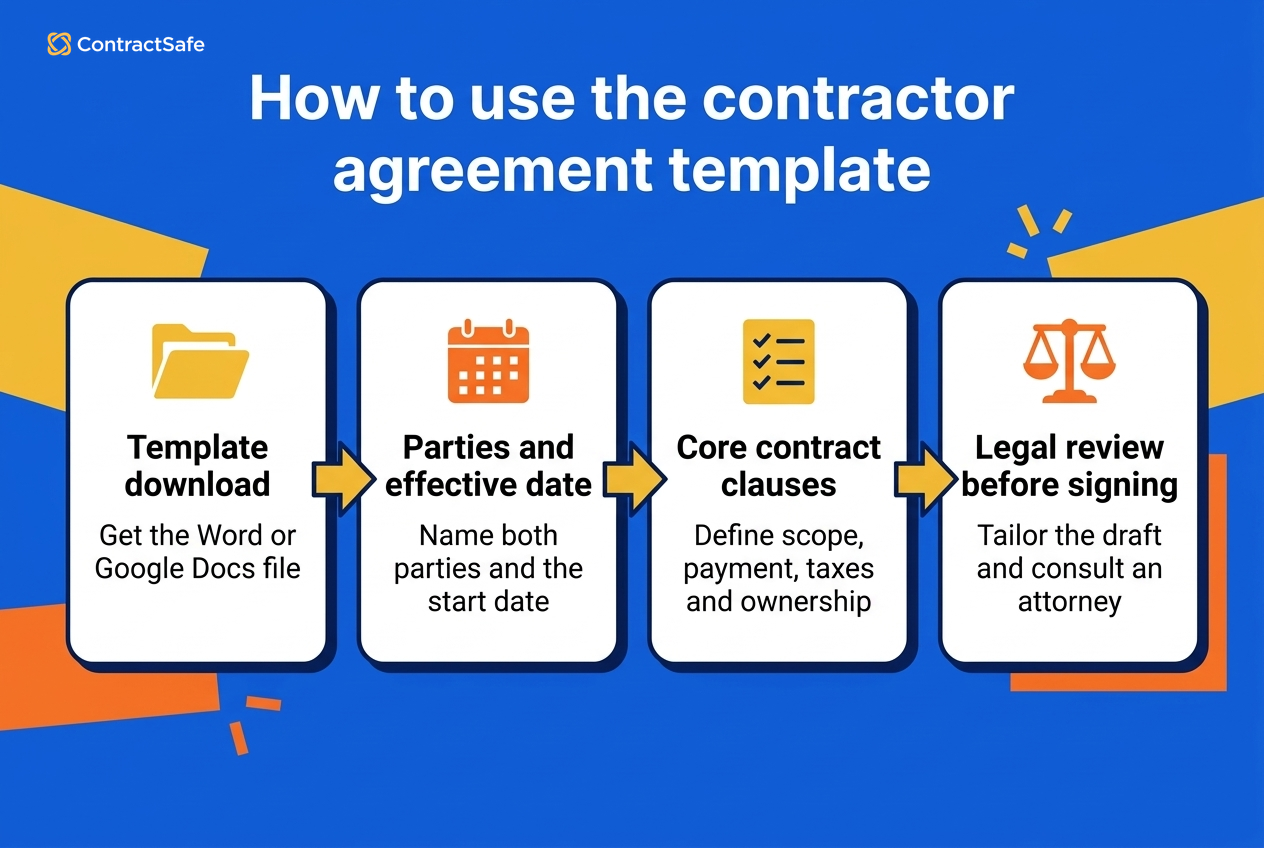
- 1. Download: Get the template file from our website. It's available in user-friendly formats like Microsoft Word and Google Docs, making customization a breeze.
- 2. Identify the parties: Clearly state the names and addresses of both the Client (the one hiring the contractor) and the Contractor (the one providing services).
- 3. Effective Date: Specify the date when the agreement comes into effect.
- 4. Clarify Independent Contractor Status: Emphasize that the Contractor is not an employee, outlining their independence in managing their work and taxes.
- 5. Define the scope of work: Be crystal clear about the services the Contractor will provide.
- 6. Establish payment terms: Outline the compensation structure in detail.
- 7. Clarify tax responsibilities: State that the Contractor is responsible for their own taxes, and the Client will not withhold any taxes from payments.
- 8. Specify insurance requirements: If necessary, require the Contractor to maintain certain insurance coverage (e.g., liability, professional liability) and provide proof of insurance.
- 9. Address intellectual property ownership: Clearly define who owns any intellectual property created during the project.
- 10. Include confidentiality obligations: Ensure the Contractor understands their duty to protect confidential information the Client shares.
- 11. Define termination conditions: Specify how and when either party can terminate the agreement, including notice periods.
- 12. Outline dispute resolution procedures: Describe the process for resolving any disagreements, such as mediation, arbitration, or legal action.
- 13. Review and customize: Carefully read the entire agreement and tailor it to your specific needs and circumstances.
- 14. Seek legal counsel: Before signing, have an attorney review the agreement to ensure it protects your interests and complies with applicable laws.
Remember: This template is a powerful tool, but it shouldn't replace professional legal advice. Always consult with an attorney to ensure your Independent Contractor Agreement is comprehensive, enforceable, and tailored to your specific situation.
FAQ
What Is An Independent Contractor Agreement?
An independent contractor agreement is a legally binding contract that outlines the terms of a working relationship between a client and an independent contractor. It defines the scope of services, payment details, deadlines, intellectual property rights, and other crucial aspects of the working arrangement.
Unlike employees, independent contractors operate independently, using their own tools and methods to complete the agreed-upon tasks. This agreement clarifies the nature of the relationship, protects both parties' interests, and helps avoid misunderstandings or disputes.
How Do I Create A 1099 Contract?
A "1099 contract" is essentially another term for an independent contractor agreement.
To create one, you should clearly identify the parties involved, define the scope of work, specify payment terms and schedules, clarify tax responsibilities (where the contractor is responsible for their own self-employment taxes), address intellectual property ownership, and include clauses regarding confidentiality, termination, and dispute resolution.
To avoid misclassification issues, it's crucial to ensure the agreement accurately reflects an independent contractor relationship, not an employment relationship. Using a template or seeking legal advice can help draft a comprehensive and legally sound 1099 contract.
What Is The New Independent Contractor Law In California?
California's Assembly Bill 5 (AB5), which went into effect in 2020, significantly changed the classification of independent contractors in the state. It codified the "ABC test" to determine whether a worker is an employee or an independent contractor.
To be classified as an independent contractor, a worker must meet all three of the following conditions:
- They are free from the control and direction of the hiring entity in connection with the performance of the work.
- They perform work that is outside the usual course of the hiring entity's business.
- They are customarily engaged in an independently established trade, occupation, or business of the same nature as the work performed.
AB5 has significantly impacted businesses that rely heavily on independent contractors, particularly in the gig economy.
What Is The Difference Between An Employment Contract And An Independent Contractor Agreement?
The main difference lies in the nature of the relationship. An employment contract establishes an employer-employee relationship, where the employer controls the employee's work, provides benefits, and withholds taxes.
On the other hand, an independent contractor agreement defines a relationship where the contractor operates independently, using their own methods and tools, and is responsible for their own taxes. Independent contractors have more autonomy and flexibility, while employees receive benefits and protections under labor laws. The agreements also differ regarding control, benefits, taxes, and intellectual property ownership. A strong agreement is only one part of engaging independent contractors compliantly, especially when classification, taxes, benefits, and control must all be evaluated together.









.svg)







.svg)