Real estate contract management software is a system for moving property agreements from request and signature through organized records, active obligations, reporting, and renewal or exit. A standard transaction typically involves several primary contracts, plus lending paperwork, disclosures, exhibits, and amendments. The system keeps each agreement connected to its property, legal entity, owner, deadlines, and current supporting documents.
Picture this: it’s late on a Friday and the VP of Asset Management at your small real estate investment trust just got a big call. An institutional buyer makes a premium offer on a retail portfolio. The only condition is that they can get full due diligence data by Monday morning to lock in the valuation. Suddenly he’s called in the whole office to find important vendor agreements, amendments, and development contracts that are spread across shared drives, emails, and someone’s local desktop.
If your contracts are the foundation holding up your operation, not knowing where they are puts the operation at risk. Incomplete documentation and miscommunication make urgent diligence harder. But with the right contract management software, real estate organizations can close deals faster, operate more efficiently, and carry less risk. Avoid a cracked foundation: put a contract process in place before the next urgent request exposes the gaps.
Key Takeaways
- Before closing, assign an owner to each executed agreement, active amendment, notice date, approval, and open diligence request.
- A real estate transaction combines representation, sale, lending, disclosure, exhibit, and amendment documents; the exact count varies by deal.
- In December 2025, 16.3% of consumer purchase contracts were canceled, up from 14.9% a year earlier, with inspection and financing issues among the reported reasons.
- Managing contracts manually across a growing portfolio creates risks such as missed payment milestones, duplicate vendor spend, and lapsed Certificates of Insurance (COIs).
- ContractSafe earned G2 Summer 2026 Easiest To Do Business With recognition, an adoption signal for teams without full-time legal departments.
Choose your next step:
Need to map the work first? Start with the real estate contract process.
Comparing a shared drive with software? Jump to the operating-model comparison.
Preparing a demo? Use the live-property decision check.
A Real Estate Contract Process From Request to Renewal
A real estate contract process should follow an agreement from the first request through review, signature, active management, and renewal or exit. The property is the organizing context, but the contract still needs a named owner and a decision at every stage.
1. Start with the property and the business request
Record the property, legal entity, contract type, requester, proposed counterparty, and business reason before review starts. That intake record prevents a landscaping renewal from taking the same path as a construction agreement with lien exposure or a purchase agreement with a closing calendar.
For example, imagine an asset manager requesting a new elevator maintenance agreement. The request should identify the building, equipment, budget owner, service start date, and existing vendor relationship. Legal can then see whether the work replaces an agreement, overlaps another property contract, or creates a new insurance requirement.
2. Review the terms that change property risk
Route the agreement to the people who can evaluate its actual risks. Facilities may confirm the service scope. Finance may review price escalators and capital-versus-operating treatment. Legal may inspect indemnity, insurance, termination, assignment, and change-of-control language. The contract record should preserve which version each reviewer approved.
That matters because real estate terms interact. A vendor agreement can affect a lease obligation, a lender covenant, or an insurance requirement. Keeping the related documents connected gives the reviewer enough context to make a decision rather than approving one isolated PDF.
3. Capture the executed record and its deadlines
After signature, confirm the final agreement, effective date, notice window, renewal rule, payment milestones, insurance dates, and owner. Link exhibits and amendments to the governing agreement. A signed document without those operating details is stored, but it isn’t yet managed.
Use a concrete handoff test: the person responsible for the property should be able to open the executed agreement, see the current service level and renewal date, and know what decision is due next. If that answer still depends on the deal team’s inbox, the handoff is incomplete.
4. Manage performance and changes
Real estate agreements change while the property stays in service. A construction change order moves price and schedule. A broker amendment changes commission. A vendor addendum changes insurance or scope. Record each change next to the governing agreement and update the dates or amounts the team reports on.
Don’t overwrite the prior document. Keep the history and mark which terms now control. That gives finance an auditable basis for payments and gives legal a reliable record when a dispute or diligence request arrives.
5. Make a renewal, renegotiation, or exit decision
An alert should create a decision, not merely announce a date. The owner needs enough lead time to review performance, current pricing, termination rights, open obligations, and replacement options. Record the decision and any notice sent so the next owner can understand what happened.
For a property-management agreement, that may mean comparing service issues and fees before an auto-renewal window closes. For a construction contract, it may mean confirming final lien releases and closeout documents before the last payment. The same system supports both because the workflow is tied to the agreement’s risk and next action.
Manual Tracking vs Real Estate Contract Management Software
The useful comparison isn’t whether a shared drive can hold a PDF. It can. The decision is whether the operating model can keep the current document, owner, deadline, approval record, and related property context accurate as the portfolio changes.
| Buyer test | Shared drive and spreadsheet | Contract management software |
|---|---|---|
| Current agreement | Depends on naming conventions and someone moving the final file | Connects the executed agreement, amendments, exhibits, and history |
| Deadline ownership | Dates sit in rows or personal calendars and can lose their owner | Alerts attach a date, lead time, and named owner to the contract record |
| Property context | Folder structure carries context until a property or entity changes | Metadata and related records support property, entity, contract type, and owner views |
| Review evidence | Approval lives in email and may not identify the reviewed version | Workflow history records reviewers, decisions, versions, and timestamps |
| Portfolio reporting | Someone merges and cleans rows before each request | Saved reports use reviewed contract data and current owners |
A spreadsheet may remain sensible for a small, stable set of agreements with one diligent owner. The case for software strengthens when properties change hands, multiple teams need answers, scanned records defeat search, approvals happen before signature, or missed notice windows have financial consequences.
Buyer Scorecard: Demo Tests on a Live Property
Don’t evaluate software only with a clean vendor sample. Pick one active property and assemble the agreements that make it operate: a service contract, a construction or repair agreement, an insurance document, a broker agreement, and one amendment. Use that packet to test the work your team performs.
Find the controlling language. Search for an assignment clause or notice window without using the file name. Confirm the result points to the executed agreement or active amendment.
Reconstruct the relationship. Open the master agreement and verify that exhibits, change orders, amendments, and insurance documents are connected without relying on a folder path.
Route a real approval. Send a nonstandard term to legal and a price change to finance. Confirm each reviewer sees the right version and the history records the decision.
Create a deadline decision. Set a notice or renewal alert with a named owner and enough lead time to compare performance and alternatives.
Answer a portfolio question. Produce a report of agreements expiring in a chosen period, grouped by property and owner, then trace one row back to its source document.
A strong result isn’t a perfect demo. It’s a clear record of what the system found, what a human confirmed, who owns the next action, and where the source agreement sits. Write down misses as well as wins so the buying team can compare tools on the same evidence.
Build the migration packet before the software project starts
For each phase-one property, create a migration packet with the executed agreement, active amendments, exhibits, owner, counterparty, property entity, notice deadline, renewal rule, and access group. Mark uncertain fields instead of guessing. The implementation team can resolve gaps as decisions instead of hiding them inside a bulk upload.
Use three statuses: ready, needs review, and missing controlling document. A ready record has a complete document set and a confirmed owner. A record that needs review has a source but an uncertain date or amendment relationship. A missing-document record stays out of operating reports until someone resolves the gap.
Define the first reports and handoffs
Name the reports leadership already asks for: upcoming notices by property, agreements without owners, active construction commitments, expiring insurance evidence, or vendor contracts by entity. For every column, decide whether it comes from a reviewed field, a workflow decision, or a source document. That rule keeps a clean-looking dashboard from outrunning the contracts behind it.
Then test a real handoff. Move one property from acquisitions to asset management and ask the new owner to find the current agreement, amendment, next notice date, approval history, and open obligation. If the handoff works without a side spreadsheet or inbox search, the operating model is ready to scale.
What to bring into the final buying meeting
Bring the test packet, the score for each task, the implementation work still required, and the first group of agreements you would migrate. Finance should see the full first-year scope. Legal should see how review and access work. Property teams should see how quickly they can answer an ordinary question without opening a support ticket.
That meeting should end with a narrow phase-one decision. Name the properties, contract types, owners, dates, and reports that must work first. A defined first phase creates useful proof and keeps migration from turning into an endless cleanup project.
Common Contracts in Real Estate
Getting a real estate deal across the finish line in the transaction process requires maneuvering through a careful dance of disclosures, agreements, negotiations, diligence, and seemingly endless documentation.
| Contract Type | Where It Shows Up in a Real Estate Portfolio | Key Risk if Untracked |
|---|---|---|
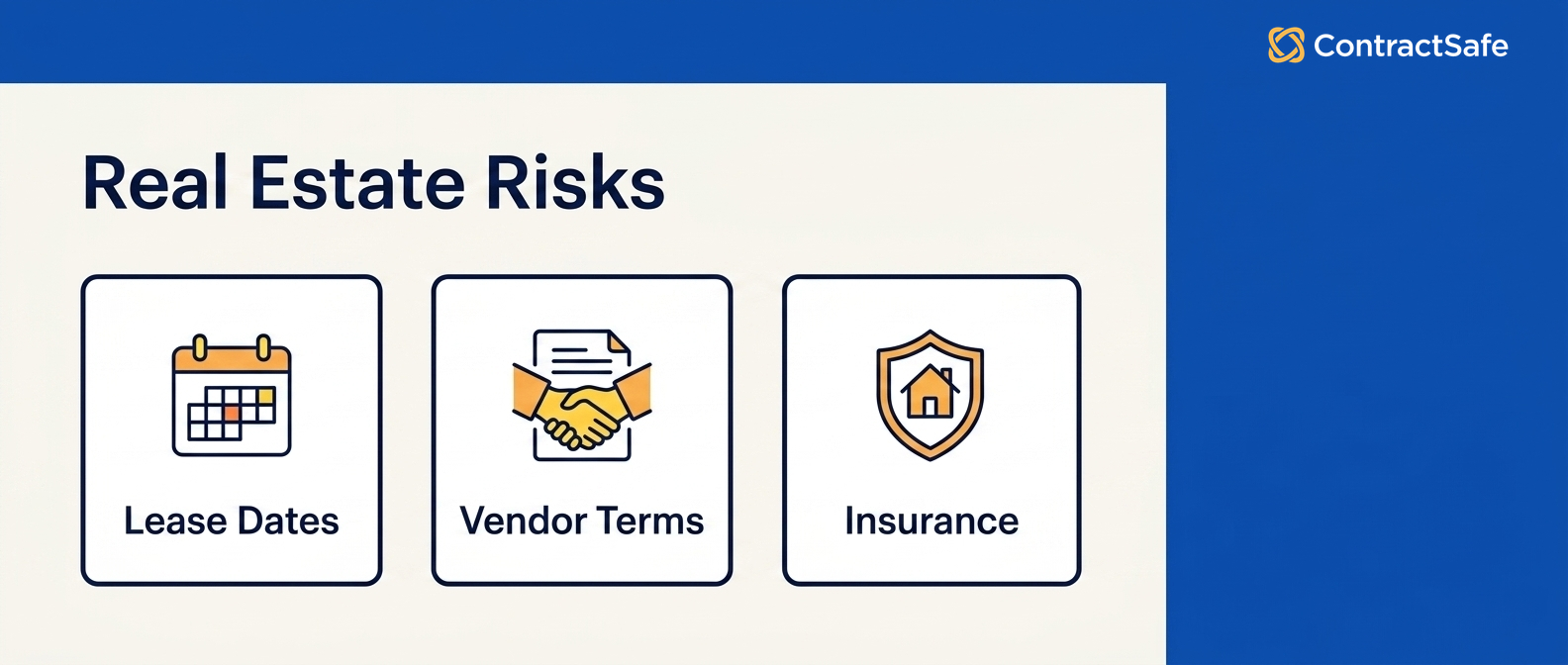
| Vendor and Service Agreements | Property management level (HVAC, landscaping, security, and janitorial across individual assets). | Costly auto-renewals on unfavorable terms; duplicate spend during internal property handoffs; lapsed Certificates of Insurance (COIs) creating massive liability. |
| Construction and Contractor Agreements | Capital expenditures (CapEx), tenant improvements (TIs), and major structural renovations or new developments. | Mechanics’ liens filed against the property due to missed payment milestones; unauthorized budget overruns from missing change-order sign-offs. |
| Broker and Commission Agreements | Active leasing pipelines, property acquisitions, and asset disposition marketing. | Unexpected post-closing clawbacks or double-paying brokers because an amended commission schedule was buried in a team member’s email inbox. |
| Acquisition and Disposition Documents | Transaction management, due diligence data rooms, and historical entity closing folders. | Blown deal timelines or lower asset valuations because the team spent weeks manually hunting down original titles, deeds, or environmental disclosures. |
| Joint Venture and Partnership Agreements | Entity-level investment structures, GP/LP arrangements, and equity funding mechanisms. | Missing critical capital call deadlines or triggering structural gridlock over distribution waterfall formulas that the asset management team can’t quickly verify. |
| Financing and Insurance Documents | Debt sourcing, refinancing pipelines, and portfolio-wide risk management policies. | Technical default on loan covenants (like untracked Debt-Service Coverage Ratios); costly gaps in coverage that leave an entire property exposed during a disaster. |
Working in real estate means every transaction is part of a careful renovation, and each screw and nail (or document and deadline) needs to be accounted for. A small glitch and the whole building can come crashing down. Organizations that manually manage documents and agreements are carrying unnecessary financial and operational risk, especially as the portfolio grows. These issues also extend into lease administration, where tracking critical dates and obligations adds another layer of complexity with its own dedicated systems and discipline that often requires customization that’s difficult to implement manually.
Where Real Estate Organizations Lose Control of Their Contracts
Contract disorganization and mismanaged pre-signature activity carry steep consequences. Without centralized real estate contract management software, poorly managed redlining quickly creates a version control trap, where documents fly back and forth until everyone loses track of the “true” final version. Delayed negotiations then create bottleneck after bottleneck, leaving contracts to stall while being shuffled between teams for approval.
These pitfalls result in real losses: key people involved grow frustrated, and major deals fall through. While commercial real estate doesn’t track cancellation rates, consumer housing does and deals are falling through at record-high levels. An analysis of MLS listings by Redfin found that 16.3% of purchase contracts were canceled in December 2025, compared with 14.9% a year earlier. The residential benchmark doesn’t establish the causes or cancellation rate for commercial transactions.
During Acquisitions and Due Diligence
When a buyer requests a complete contract package, they expect it within a few hours, maybe a day, but certainly before a few weeks. Teams without centralized real estate contract management software will spend weeks assembling documents. This can put deals and valuations at risk, and it signals operational immaturity to buyers and partners.
With an AI-powered central repository, however, your team is always audit-ready. OCR can make uploaded agreements searchable, while AI-assisted extraction can suggest fields for human review before they drive a report. That makes diligence preparation easier without guaranteeing a universal timeline. Software can make it faster to export an organized portfolio, helping the team answer buyer requests without implying a guaranteed timeline or valuation outcome.
When a Property Changes Hands Internally
Handing a property to a new asset manager without a centralized contract system is like asking them to renovate a skyscraper without showing them where the load-bearing posts are. Your new asset manager might accidentally cancel a important vendor or inherit terrible terms because they are flying blind. This lack of clear contract information can result in real money lost with duplicated vendor spend and a slow ramp-up that costs valuable time.
Across a Portfolio That Keeps Growing
Sure, the manual systems might work when you have 10 properties. But what happens when you suddenly have 30, 50, or even 150? Just like you can’t build a skyscraper on a foundation poured for a single-family home, your growing portfolio will ultimately get too large for your manual contract management. Each new acquisition brings a stack of agreements. New development projects generate a trail of contractor and subcontractor documents. The real estate organizations that build the right infrastructure early are the ones that can scale without the operational drag of a contract backlog that no one can search.
How to Evaluate Real Estate Contract Management Software
ContractSafe delivers AI-powered contract management software that helps real estate organizations grow and protects institutional knowledge even through employee turnover or rapid asset acquisition.
Every Contract for Every Property, in One Place
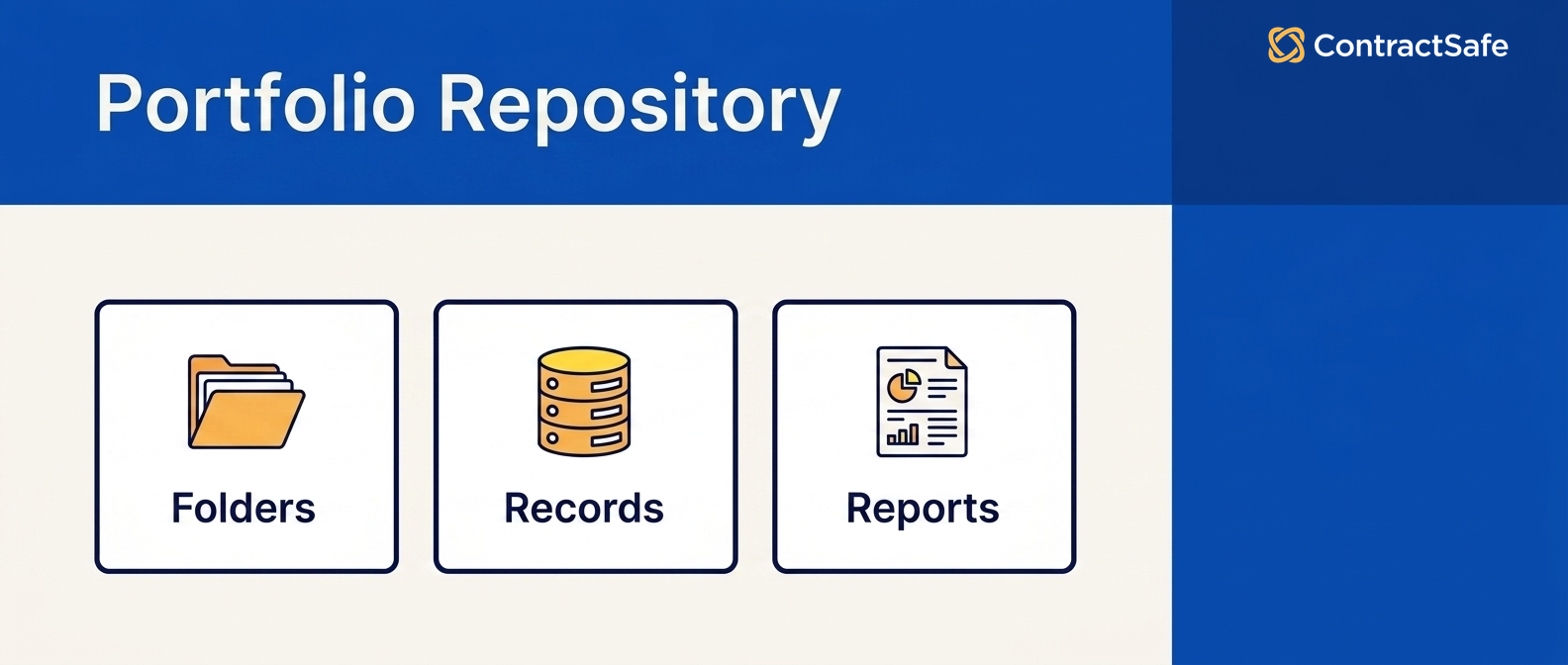
A strong full-lifecycle system gives real estate teams a central hub for every agreement tied to every property. ContractSafe’s repository is one capability inside that broader lifecycle. It acts as a master digital blueprint for your entire portfolio, linking your acquisition agreements to your contractor agreements to your financial documents. Teams can organize these documents how they see fit: by property, entity, deal, or contract type, and every contract can be linked to related documents and contextual elements. Beyond basic organization, ContractSafe offers portfolio-level reporting to give executives a macro-view of active deals.
Find Anything Across the Entire Portfolio in Seconds
When a real estate portfolio scales to dozens or hundreds of properties, it becomes almost impossible to manually verify an indemnification clause in a three-year-old construction amendment.
ContractSafe’s AI-powered natural language search turns your contract repository into an instant, Google-like experience. You don’t need to know the file path, the exact document name, or even who uploaded it. OCR makes scanned deeds and legacy leases searchable, while AI-assisted extraction presents suggested terms for a person to confirm against the source. Type what you’re looking for, like "assignment clause" or "HVAC maintenance," and the AI scans the text inside every agreement across your entire portfolio to find your answer.
Never Miss a Critical Deadline Again
Disorganization costs money when key milestones slip through the cracks. ContractSafe features automated alerts and key-date tracking designed specifically for real estate workflows. You can set proactive reminders for lease renewals, insurance certificate (COI) expirations, and financial covenant dates. Instead of reacting to a missed deadline, your team is prompted weeks in advance, protecting your cash flow and asset compliance.
Secure Due Diligence with Permission Controls
When that urgent Friday afternoon call for due diligence comes in, you need to find files fast, and you need to be able to share them securely. ContractSafe can shorten data-room preparation by making executed agreements and related records easier to find and share. With robust permission controls, you can grant outside parties, institutional buyers, or external legal teams restricted, read-only access to specific folders or properties, protecting your broader portfolio data while keeping deals moving.
Built for Teams That Are Not Full-Time Contract Managers
Your property managers, asset managers, and acquisition teams aren’t attorneys or legal ops professionals. ContractSafe is designed for the way real estate organizations actually work, especially in small or mid-sized teams that don’t have a large legal staff.
Unlimited users remove the per-seat tradeoff between cost and participation. Fast onboarding and a dedicated Customer Success Manager give the implementation a named support path while the team loads its first property packet and confirms the operating rules.
Related Reading
Use the mergers and acquisitions due diligence guide to plan the contract evidence a buyer will request.
Review lease administration and agreement guidance when property obligations depend on lease dates and notices.
See how small and mid-sized teams manage contracts without a large legal-operations staff.
How ContractSafe Helps Real Estate Teams
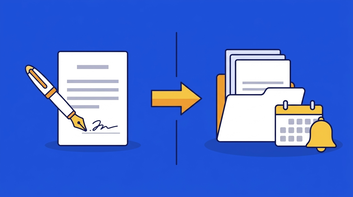
ContractSafe supports intake as well as signature, approvals, organized records, reporting, alerts, and renewal decisions across the full contract lifecycle.
ContractSafe is full-lifecycle contract management software for teams that need agreements to move cleanly from signature and approval into organized records, alerts, reporting, and renewal decisions. Real estate teams can structure the work around properties, entities, contract types, and owners without making the repository the whole product story.
The ContractSafe feature set connects the executed agreement to the work that follows. Teams can keep related documents together, search inside scanned files, assign record-level access, report across the portfolio, and set alerts with enough lead time for a real decision.
AI-assisted search and extraction can surface terms from legacy deeds, leases, service agreements, and amendments, while a person confirms the source before the data drives a report or deadline. That combination helps an asset manager answer a question quickly without treating an AI summary as the contract.
Unlimited users let legal, finance, acquisitions, facilities, and property teams work from the same governed system. Folder-, tag-, record-, and role-based access can keep sensitive agreements limited to the right people while routine contract answers reach the teams responsible for acting on them.
The practical starting point is one live property and its active agreements. Load that packet, connect its amendments, confirm the owners and dates, route one approval, and build one report leadership already asks for. Then expand with evidence that the process works.
Request a demo and bring that property packet so the evaluation uses your real documents and decisions.






.svg)







.svg)