Assessing your contract management needs means identifying where contracts create risk, delays, or confusion across your organization before selecting software.
A contract management needs assessment evaluates how contracts are created, stored, accessed, and tracked today. It surfaces post-signing gaps like unclear ownership, missed deadlines, and contracts scattered across systems—issues that directly affect adoption, accountability, and compliance.
Without this step, teams choose tools based on features instead of workflows. With it, organizations can prioritize the lifecycle stages that matter most, align stakeholders early, and adopt contract management software that fits how work actually gets done.
Key Takeaways: What is a contract management needs assessment?
A contract management needs assessment is the process of evaluating how your organization creates, stores, accesses, and tracks contracts before adopting contract management software. The goal is to identify workflow gaps, post-signing risk, and adoption barriers so you select a system that supports how your teams actually work. It is often used to determine whether an organization needs post-signing tools, full contract lifecycle management, or a phased adoption approach.
Do you actually need contract management software?
Not every organization needs more tools—but most teams need better visibility. Knowing which gaps are real also tells you how much implementation support you'll actually need.
If contracts are hard to find, ownership is unclear, or key dates depend on manual tracking, the issue usually isn’t contract volume. It’s the lack of a centralized, reliable system.
A needs assessment helps determine whether contract management software solves a real operational problem or whether process improvements alone would be enough. This prevents teams from buying software “just in case” or delaying adoption until risk compounds.
Common alternate terms people use for this stage:
contract management assessment, contract lifecycle management (CLM) readiness evaluation, contract software evaluation, contract process review.
If contracts influence revenue, compliance, or vendor relationships, a centralized system is usually a requirement—not a nice-to-have.
RELATED READ: The High Cost of Waiting: Why Now’s the Time to Upgrade Your Contract Management Game
Which stages of the contract lifecycle actually need support?
Not every organization needs full contract lifecycle management. Some organizations need end-to-end coverage from day one; others benefit from prioritizing specific stages first.. A needs assessment helps determine which stages of the lifecycle create the most friction or risk—so you don’t overbuy software or under-support critical work.
Do you need help before contracts are signed?
Some teams struggle with drafting, redlining, or approvals. Others already manage pre-signing workflows effectively using familiar tools or external legal support.
If pre-signing processes are already working, adding new systems can introduce unnecessary complexity and slow adoption. A needs assessment should confirm whether pre-signature automation solves a real problem or simply adds another layer to manage.
Do you need help after contracts are signed?
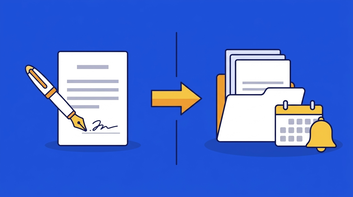
Post-signing is where most long-term contract risk lives. Missed renewals, forgotten obligations, and inaccessible agreements typically happen after execution—not before it.
If teams struggle to locate contracts, track deadlines, or understand ongoing responsibilities, post-signing visibility and tracking should be the top priority in your assessment.
Do different teams rely on contracts in different ways?
The types of contracts you manage—and who manages them—also matter. Vendor agreements, employment contracts, customer agreements, and compliance documents often require different access levels and tracking needs.
These issues often compound over time because they aren’t immediately visible when a contract is signed. A strong needs assessment accounts for these differences so the system supports real usage across departments instead of forcing one-size-fits-all workflows.
RELATED READ: Four Strategies for Accelerating the Adoption of Contract Management Processes
Where do contracts break down after signing?
Most contract problems don’t fail loudly. They fail quietly—after the agreement is executed and attention moves on.
Post-signing breakdowns usually happen when contracts are no longer actively managed, even though obligations, renewals, and compliance requirements continue. A needs assessment should focus heavily on this stage because small gaps here tend to create long-term risk.
Common post-signing breakdowns include:
-
Contracts stored across shared drives, inboxes, and local folders, making it difficult to locate the final, authoritative version
-
No clear contract owner after execution, leading to missed follow-ups and unclear accountability
-
Renewal and expiration dates tracked manually, increasing the chance of missed deadlines or unwanted auto-renewals
-
Compliance obligations buried in PDFs, with no easy way to monitor or surface requirements over time
A strong contract management needs assessment documents where these breakdowns occur today so automation supports real operational problems—not theoretical ones.
RELATED READ: 5 Legal Tech Adoption Challenges (And How To Overcome Them)
Who needs access to contracts—and at what level?
Access to contracts is rarely all-or-nothing. Different teams rely on contracts in different ways, and access needs often change after agreements are signed.
A practical contract management needs assessment clarifies not just who needs access, but how and when. Without this clarity, teams either restrict access too tightly—slowing work—or open it too broadly, creating security and accountability issues.
A strong assessment answers:
- Who needs read-only access to review terms, obligations, or status
- Who uploads or edits contracts, and at which stages
- Who should never delete agreements, even if they didn’t create them
- Which teams rely on contracts most frequently for renewals, compliance, or reporting
For regulated or cross-functional organizations, access rules also play a critical role in audits, compliance reviews, and internal controls.
Clarifying access needs early helps prevent security gaps, internal friction, and over-permissioning later—especially as more teams rely on contracts day to day.
How should teams align before choosing contract management software?
Contract management adoption often slows not because of the software, but because alignment happens too late.
When stakeholders are added after tools are shortlisted, decision-making becomes reactive and scope expands quickly. A needs assessment should establish alignment before software evaluation begins.
Before comparing tools, teams should:
- Identify decision-makers versus contributors, so feedback is structured
- Agree on the primary problem being solved, whether it’s visibility, renewals, or access
- Define what successful adoption looks like in practice, not just in features
This keeps needs assessments from turning into feature wish lists and helps teams move forward with clarity instead of consensus fatigue.
RELATED READ: Five Tips for Successful Contract Management Software Adoption
Common mistakes—and how to apply this assessment
Even well-intentioned needs assessments can go off track. The goal isn’t to document every possible scenario—it’s to make better decisions faster.
❌ Mistake: Buying full-lifecycle contract management software without clear priorities
✅ Apply instead: Identify which lifecycle stages create the most risk or operational drag today, even if full lifecycle support is required
❌ Mistake: Letting feature lists drive the evaluation
✅ Apply instead: Document real workflows before reviewing tools
❌ Mistake: Ignoring adoption complexity
✅ Apply instead: Choose systems teams can realistically use from day one
A focused assessment creates momentum instead of slowing decisions—and makes adoption more likely to succeed.
How ContractSafe supports fast, realistic adoption across the full contract lifecycle
A contract management needs assessment often reveals different priorities for different organizations. Some teams need targeted support in specific stages. Others need visibility and control across the entire contract lifecycle—from creation through post-signature management.
ContractSafe is designed to support the full contract lifecycle while allowing teams to adopt at their own pace. Organizations can start with the stages that create the most friction today—often post-signing visibility, access control, and renewal tracking—and expand into additional full lifecycle management as needs evolve or requirements become more complex.
This approach helps teams avoid overengineering early while still ensuring the system can support more complex workflows over time. Whether your organization needs focused post-signature control or full lifecycle management, ContractSafe adapts to how contracts are actually managed across departments, without forcing rigid processes or slowing adoption.
RELATED READ: Contract Management Software Implementation Made Easy
Key Takeaways
-
A contract management needs assessment focuses on workflows, not features
-
Post-signing stages often carry the highest risk and operational impact
-
Clear access rules and ownership prevent friction as more teams rely on contracts
-
Early alignment helps teams avoid overbuying and adoption slowdowns
-
Assessing needs first leads to faster rollouts and better long-term use
Conclusion: Turning assessment into adoption
A contract management needs assessment is only valuable if it leads to better decisions. When teams clearly understand where contracts break down, who relies on them, and which stages matter most, adoption becomes easier and outcomes improve.
That’s where the right software choice matters. ContractSafe is built to support the needs most organizations identify during assessment—especially post-signing visibility, controlled access, and reliable tracking—without forcing teams into rigid workflows or unnecessary complexity.
By starting with a clear assessment and choosing software designed for realistic adoption, teams can improve contract management without slowing work or overwhelming users.
Ready to see what simple contract management looks like?
If your needs assessment points to better visibility, easier access, and fewer missed obligations, the next step is seeing how it works in practice.
Schedule a demo of ContractSafe to see how teams centralize contracts, track key dates, and improve adoption—without slowing anyone down.







.svg)







.svg)