
Contract change management is a bit like renovating a house. You start with a signed agreement that made sense at the time. But businesses evolve, markets shift, regulations change, and suddenly the contract you signed six months ago doesn't quite fit anymore.
The question isn't whether your contracts will need changes. They will. The question is whether you have a process for making those changes without creating a bigger mess than the one you're trying to fix.
This guide covers the basics of contract change management, the challenges you'll face, best practices to follow, and how contract management software can help you handle it all without losing your mind.
TL;DR
-
Change is inevitable in contracts. Scope shifts, market dynamics, regulatory updates, and organizational pivots all require modifications to existing agreements.
-
Not all changes are created equal. Amendments modify existing terms, addendums add new ones, change orders adjust scope and cost, and extensions or renewals handle timing. Knowing which tool to use matters.
-
The power trio for handling contract changes: well-defined policies, proactive risk management, and the strategic use of contract management software.

What Is Contract Change Management?
Contract change management is the process of managing modifications to existing contracts. Think of it as the renovation planning process for your agreements. You wouldn't tear out a kitchen without a plan, and you shouldn't change a contract without one either.
This process matters because contracts don't exist in a vacuum. They live inside a contract lifecycle that's constantly influenced by external forces. Changes typically happen for a few predictable reasons.
-
Shifting scope. Maybe the project's goals or deliverables have changed. These adjustments mean updating the contract to match the new plan. This is like deciding mid-renovation that you also want to knock out that closet to make the bathroom bigger.
-
Market dynamics. Market conditions aren't static. A significant shift might mean revising contracts to keep up with the new economic landscape.
-
Legal or regulatory changes. Regulations reflect the world they govern, and that world keeps changing. Contracts need to change along with them.
-
Organizational changes. Mergers, acquisitions, or strategic pivots can reshape a business overnight. Contracts need to reflect these new realities.
-
Performance challenges. Sometimes one party isn't meeting the terms, or they're exceeding expectations. Either way, the contract might need an update to keep things fair and clear.
Types of Contract Changes
Not every renovation is the same, and not every contract change is either. Here's the difference between the most common types:
-
An amendment modifies existing terms like price, scope, or SLAs. It attaches to and becomes part of the original contract. An addendum adds new terms or schedules without altering core provisions.
-
A change order (common in construction and SOW-based work) documents scope, cost, and timeline impacts.
-
And an extension vs. a renewal works differently too: an extension continues the current agreement under the same terms, while a renewal typically restarts and may update commercial or legal terms.
Knowing which tool to reach for matters. Using an amendment when you need an addendum (or vice versa) is like using a screwdriver when you need a drill. You might get there eventually, but it won't be pretty.
How To Change a Contract
Changing a contract doesn't have to be painful. Think of it as a renovation with a clear scope of work and a permit process. Here's how to move through it step by step:
-
Get notified. Before anything else, have a system for how the contract team learns about the need for a change. Maybe it's an internal request form, maybe it's triggered by a periodic review. The point is that changes shouldn't arrive as surprise emails at 4:47 on a Friday.
-
Identify the issue. Review the contract to pinpoint what's not working. Sometimes the problem is obvious. Sometimes it's buried in a clause nobody's looked at since signing. Take your time.
-
Assess the impact. How significant is this change? Does it affect pricing, delivery timelines, compliance, or risk? Is it a load-bearing wall or just cosmetic? This determines how urgently you need to act and who needs to be involved.
-
Draft the solution. Sit down with the people involved and develop a plan. Negotiate with stakeholders and counterparties. Use approved templates and clause playbooks to keep the language consistent. Redlining best practices help here.
-
Route for approval and execute. Get everything in writing, route it through your approval matrix (legal, business owner, finance, compliance as needed), and execute via e-signature. Make sure counterparties receive final, signed copies.
-
Update everything. This is the step most teams skip, and it's the one that causes the most problems later. Update your repository, metadata, obligations, alerts, and any linked systems. Communicate operational changes to impacted teams.
-
Monitor outcomes. Keep an eye on how the new terms are performing. Track KPIs and capture lessons learned for continuous improvement.
Pain Points in Contract Change Management
Renovations rarely go according to plan, and neither do contract changes. Being ready for the contract management challenges makes a big difference.
Keeping the contract's spirit intact. Changes shouldn't stray so far from the original intent that you end up with a completely different agreement wearing the old one's name. Update the terms, but preserve the value of what the contract was meant to do.
Balancing different interests. Everyone has their own goals. Finding middle ground where all parties are satisfied takes patience, respect, and a willingness to compromise.
Staying compliant. Every change needs to line up with current laws and compliance requirements. This gets tricky when regulations are shifting underneath you.
Orphaned versions. This is the renovation equivalent of three different contractors working from three different sets of blueprints. Always use a centralized repository with version control and clear "current version" flags.
Email-only approvals. Informal email threads don't hold up the way formal signed amendments do. Follow your approval matrix and require signed amendments per the contract's own amendment clause.
Missed downstream updates. You changed the pricing terms but forgot to update the ERP. Now finance is working from the old numbers. Sync changes to linked systems and update obligations, alerts, and renewal dates every time.
6 Best Practices for Successful Contract Change Management
Planning for the challenges of contract change management is crucial, but it's just one part of the picture. To really master this process, there are some best practices you should follow.
These practices will not only help you deal with changes more easily but also ensure your contracts continue to serve your business well.
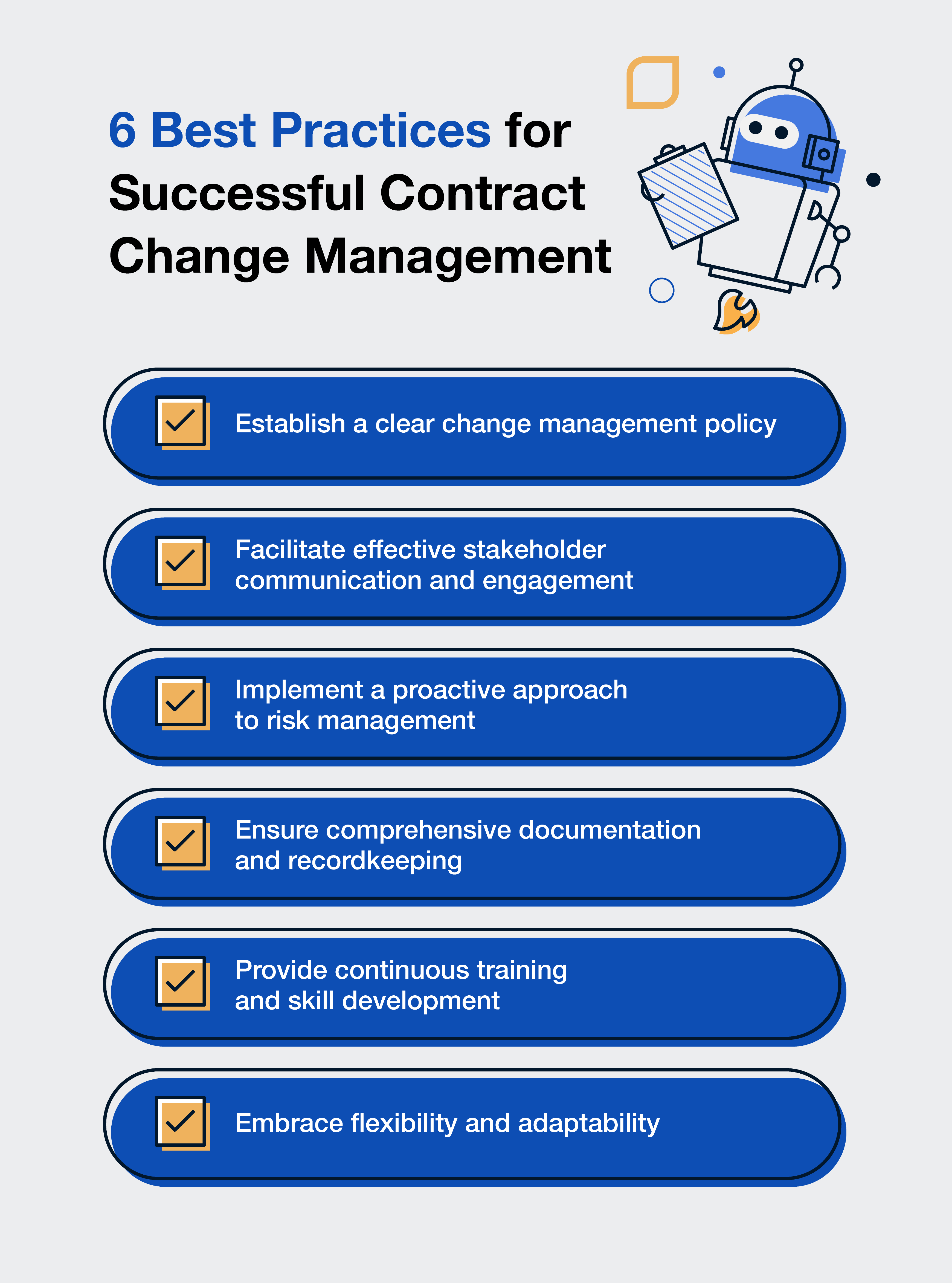
1. Establish a Clear Change Management Policy
Every renovation needs a permit process. Your contracts need one too.
A clear change management policy should cover who can initiate changes and under what circumstances, how proposed changes get reviewed and by whom, and who has final approval authority. Here’s what to include:
- Initiating changes: Clearly state who can begin the process of changing a contract and under what circumstances. This sets the stage for a structured approach to initiating changes.
- Reviewing changes: Detail the steps for thoroughly reviewing proposed changes. This ensures every proposed modification is considered carefully and critically.
- Approving changes: Define who has the authority to give the final approval for changes. This clarity helps in making the process transparent and accountable.
- Roles and responsibilities: Specify who is responsible for each part of the change process. This clarity helps prevent overlap and confusion.
- Criteria for significant changes: Establish what counts as a significant change. This helps in prioritizing and managing larger, more impactful modifications more effectively.
- Documentation and recordkeeping: Emphasize the importance of documenting each step, from the initial proposal to final approval. This is crucial for audits, future reference, and maintaining transparency.
- Communication plan: Outline how changes will be communicated to all relevant stakeholders. Effective communication is key to ensuring everyone is on the same page.
- Review and update mechanisms: Include a strategy for regularly reviewing and updating the policy itself. This ensures your change management policy stays relevant and effective in the face of business evolution, legal changes, and market shifts.
Having some basic guidelines and a contract workflow in place makes the whole process smoother. It sets a standard way of doing things and guarantees that every change is handled the right way, every time.
2. Make Sure Your Records Are Up-to-date
Think of this as keeping your blueprints updated after every renovation. If you added a bathroom but never updated the plans, nobody will know it's there when it's time to sell the house.
- Start with a simple, organized approach. Store every version of your contracts in one central repository. This way, you have a complete narrative of each contract's evolution, all in one easily accessible location.
- Keep track of the latest active version of your contract. Digital tools are great for this, giving you immediate access to the most current version and helping prevent any confusion, as well as highlighting any changes, comments or tags along the way.
- Remember the who, why, and when of each contract change. If you're using a system like ContractSafe, you're in luck. It allows you to attach all related documents and past versions directly to the main contract and doesn’t even count against your contract limit.
- Don't forget about security and accessibility. With modern cloud-based repositories, your contracts are not only well-protected but also readily available whenever you need them.
By following these tips, you'll ensure that your contract records are always clear, organized, and within reach, making your contract management process smoother and more efficient.
3. Maintain Clear Lines of Communication
Smooth change management relies heavily on how well you communicate with everyone involved. When there are proposed changes, let stakeholders know quickly and be clear about why the changes are needed.
Align cross-functional teams early. Involve legal, finance, procurement, and compliance up front, not after decisions have already been made. Use role-based permissions and structured approval paths so each team sees what they need, when they need it.
Collaborative contract management software with built-in alerts and reminders and approval workflows makes this dramatically easier than email chains and calendar reminders.
4. Create a Single Source of Truth for Contract Knowledge
Equip your team with the latest and greatest contract management knowledge by hosting regular training sessions. It’s an ever-evolving field, so this training can help everyone stay on top of their game.
- Centralized training materials: Make sure everyone on your team is trained and aware of how to use your contract management system (CMS). It’s vital that they know this system is the go-to place for the most up-to-date contract information. The file on someone's desktop from six months ago just won't cut it anymore.
- Host regular training sessions: Training should not just cover the nuances of contract management but also go into detail on how to effectively use your CMS. These sessions can be done online or even in 'lunch and learn' events.
- Invest in ongoing skill development: Allocate resources for further development of your team’s skills. This could involve attending industry conferences, participating in webinars, or providing access to in-depth learning materials. Focus on equipping your team to not only understand the intricacies of contract changes but also to be adept at navigating your CMS for the latest data.
Training gives your team the tools they need to succeed. When they know the latest practices and how to use new technology effectively, they’ll be ready for anything that pops up.
5. Be Proactive in Risk Management
Every renovation uncovers something unexpected behind the walls. Contract changes are the same way.
Here are some common contract change risks and how to address them:
- Delays: Contract changes can sometimes cause delays. Whether it's due to new terms or shifting expectations, planning ahead for these possibilities can keep your project on schedule.
- Overspending: Be mindful of how contract amendments might impact your costs. A thorough review of budget implications will help you adjust financial plans accordingly.
- Regulatory blowback: Ensure every contract alteration adheres to current laws. A legal review process is vital to avoid complications down the line.
- Misunderstandings: Clear and consistent communication is crucial. Ensuring everyone's on the same page about the contract's changes can prevent conflicts and confusion.
Managing risks proactively involves crafting effective solutions tailored to each situation. Whether it’s through additional reviews or enhanced communication strategies, being prepared will keep your transitions smooth and your project goals on track.
6. Embrace Flexibility and Adaptability
Sometimes the path from A to B is paved with quicksand, and you need to adjust your course.
This could mean revising parts of a contract or finding new ways to meet your goals when the original plan doesn't survive first contact with reality.
Creating a workplace culture that values this kind of flexibility is invaluable. But remember, being adaptable means having the right tools and systems in place. The right technology makes adapting to changes much easier than flying by the seat of your pants.
Leveraging Technology in Contract Change Management
The right contract management software is like having a general contractor who keeps your renovation on schedule, on budget, and up to code.
-
Contract repository: A central hub for all your contracts. Access any document in a few clicks, with every version organized and the most recent always easy to find. This is crucial during revisions, when quick access to various versions is essential.
-
Contract tracking and version control: Every amendment and update is recorded and easy to trace. No more confusion about which version is current. No more contractors working from different blueprints.
-
Alerts and notifications: Timely reminders about deadlines, renewals, and changes that need attention. You're always one step ahead, minimizing the risk of missing critical dates.
-
Integrations: Connect your contract management with CRM and ERP systems so information flows seamlessly between departments and contract data supports wider business decisions.
-
AI-powered assistant: Summarize amendments, extract obligations, and flag nonstandard language to focus reviewers' attention where it matters most.
-
Audit trails and e-signature: Preserve who changed what, when, and why. Execute amendments securely and ensure signed copies auto-attach to the contract record.
Ready to stop renovating without a plan? Schedule a demo today and see how ContractSafe can simplify your contract change management.
Key Metrics to Track
You wouldn't finish a renovation without a final inspection. Track these KPIs to make sure your contract changes are actually working:
-
Change cycle time: days from request to fully executed amendment.
-
Approval time: time spent waiting on approvers, which highlights bottlenecks.
-
On-time implementation rate: percentage of changes that go live by the effective date.
-
Cost/price variance: net commercial impact vs. plan after changes.
-
Compliance rate: percentage of changes with complete documentation, approvals, and repository updates.
Learn How ContractSafe Can Simplify Your Contract Management Strategy
Discover the ease and efficiency of managing your contracts with ContractSafe. Our platform streamlines every aspect of contract management, from automated workflows to seamless integrations, ensuring your contracts are always up-to-date and compliant.
Ready to take the next step?
Schedule a personalized demo today and witness firsthand how ContractSafe can simplify and enhance your contract management strategy.









.svg)







.svg)