
A good contract tracking system helps organizations avoid missed contract deadlines, including renewal dates, notice periods, and ongoing obligations. ContractSafe's contract reminders and date tracking cover each of those.
Missing a contract deadline doesn’t usually feel dramatic in the moment. It often looks like an email you didn’t see, a calendar reminder that fired too late, or a renewal clause buried on page 14. But the consequences can be very real: lost negotiating leverage, higher renewal costs, unintended auto-renewals, or contracts continuing under unfavorable terms.
Contract deadlines exist to give organizations control. But that control disappears the moment a deadline is missed. That’s why tracking key contract dates isn’t just an administrative task — it’s a governance issue.
Key Takeaways
Contract deadlines include renewal dates, notice periods, termination windows, and other time-bound obligations written into agreements. Organizations miss them when contracts and reminders live in separate systems. The most reliable way to track contract deadlines is to manage dates directly alongside the contracts themselves, with clear ownership, visibility, and alerts.
What Are Contract Deadlines (and Which Ones Matter Most)?
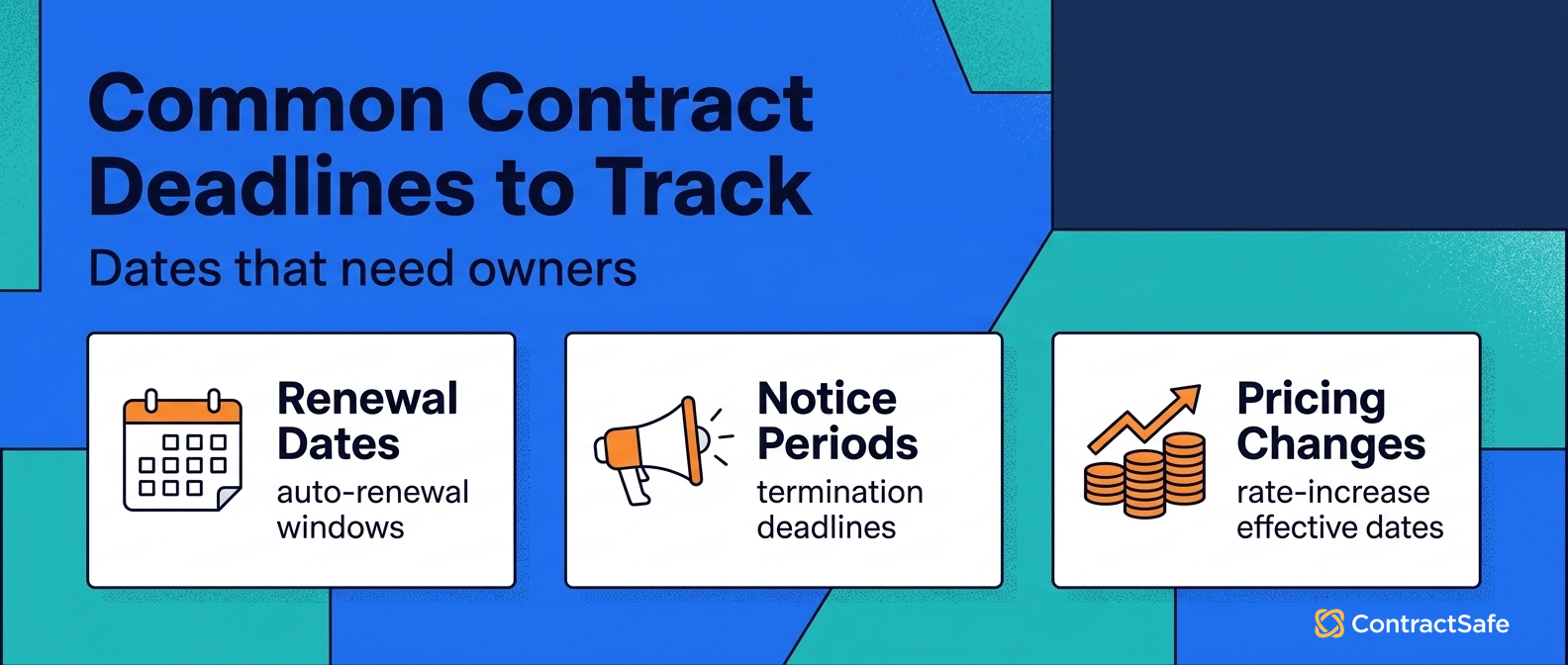
Contract deadlines are the time-based requirements written into agreements that determine what actions must happen — and when.
Common contract deadlines include:
-
Renewal dates and auto-renewal windows
-
Notice periods for termination or non-renewal
-
Extension or amendment deadlines
-
Pricing or rate-increase effective dates
-
Performance or compliance obligations tied to specific timeframes
These dates often determine whether a contract continues, changes, or ends. Missing even one can eliminate your ability to renegotiate or exit on favorable terms.
RELATED READ:
Why Do Organizations Miss Contract Deadlines?
Most missed contract deadlines aren’t caused by negligence — they’re caused by fragmentation.
Common reasons include:
-
Contracts stored in shared drives, inboxes, or multiple systems
-
Deadlines tracked in calendars that aren’t connected to the contract
-
No clear owner responsible for acting on the deadline
Multiple reminders that don’t show why the date matters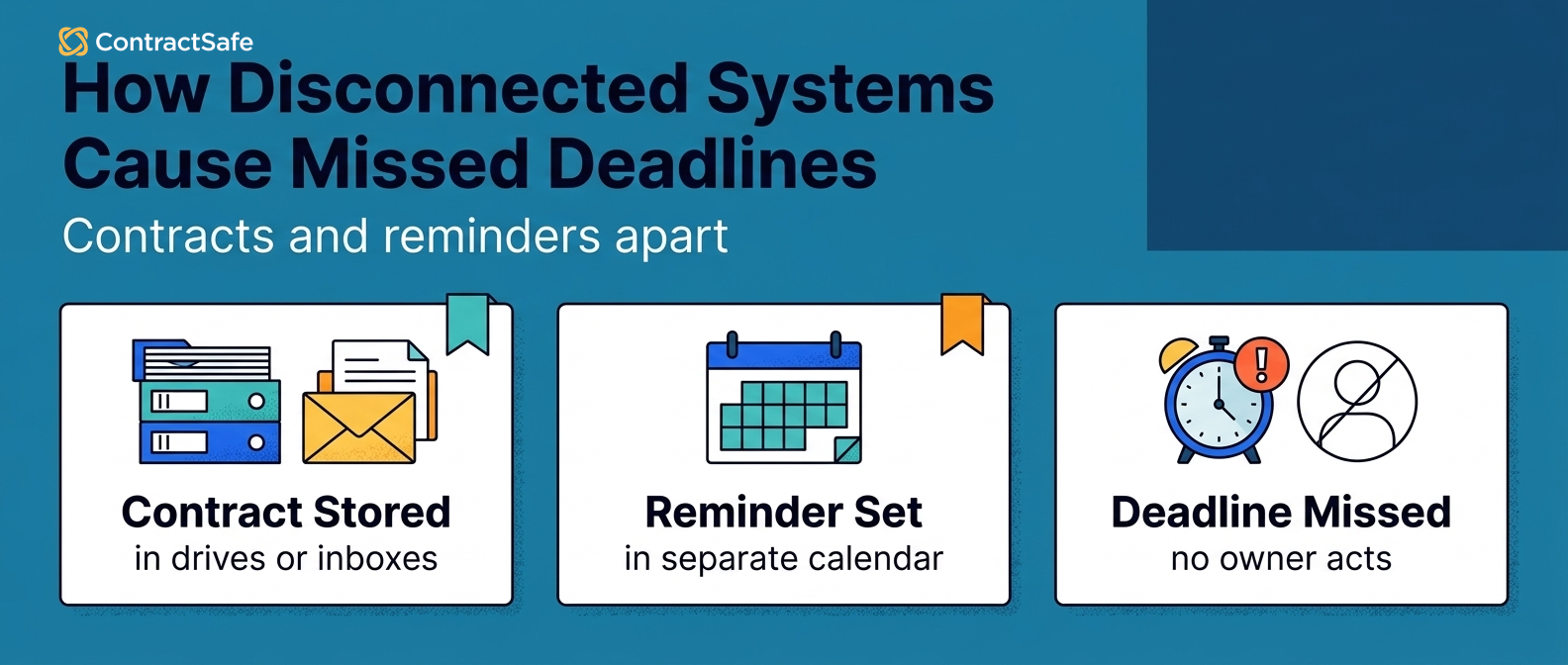
RELATED READ: Best Practices for Contract Redlining & Change Tracking in a CMS
What Makes a Good Contract Deadline Tracking System?
Because contract deadlines can directly impact cost, risk, and leverage, the system used to track them matters.
A reliable contract deadline tracking system should:
-
Be easy to set up and maintain
-
Track renewals, notice periods, and recurring obligations
-
Show deadlines in a shared calendar or dashboard
-
Support multiple alerts per contract
-
Allow reminders to be sent to internal and external stakeholders
-
Keep deadlines directly tied to the contract document
The closer the deadline lives to the contract itself, the less likely it is to be missed.
RELATED READ: 5 Proven Tips for Better Contract Tracking
Why Calendars and Task Tools Fall Short for Contract Deadlines
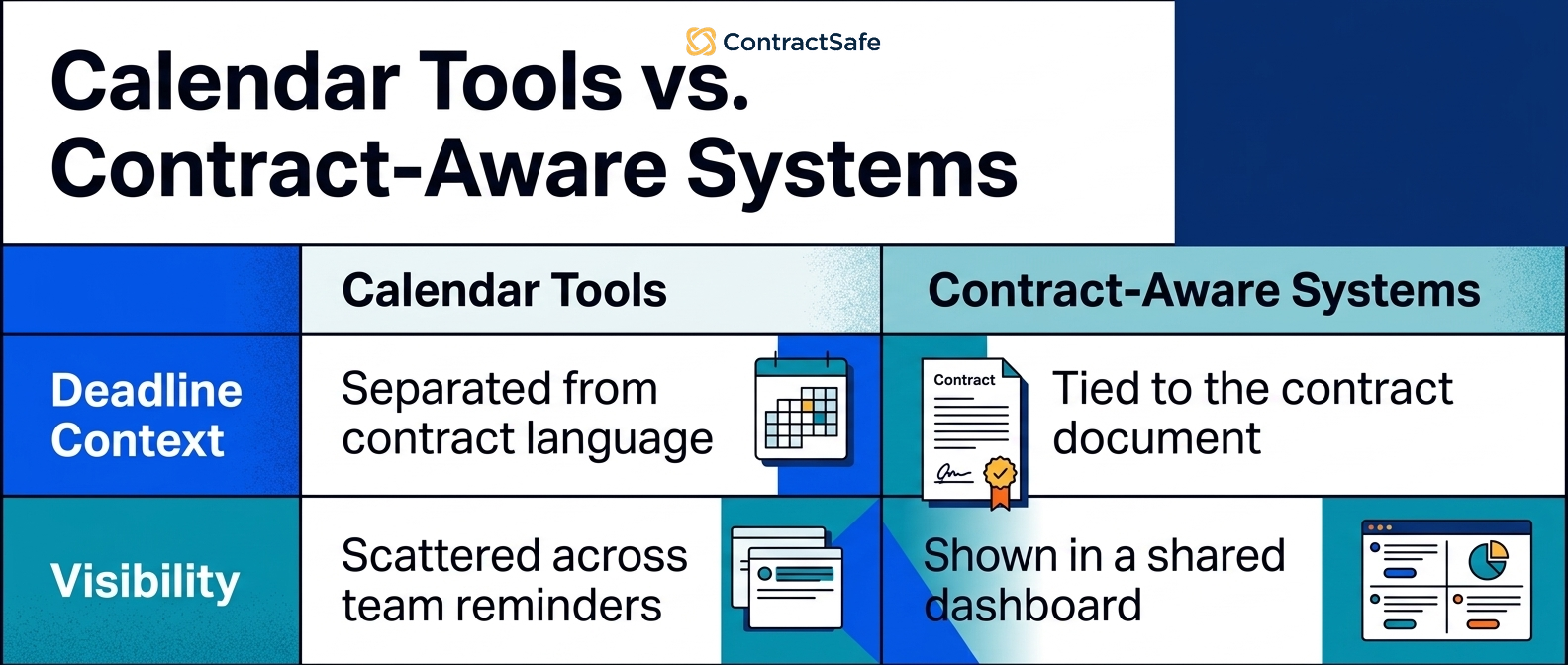
Many organizations rely on email reminders, task managers, or personal calendars to track contract deadlines. These tools can work at a very small scale, but they introduce risk as complexity grows.
Limitations include:
-
Deadlines are separated from the contract language
-
No easy way to see all key dates for a single agreement
-
Multiple versions of the same reminder across teams
Loss of reminders when systems change or users leave
How Contract Lifecycle Management Software Improves Deadline Tracking
Contract lifecycle management (CLM) software is designed to manage contracts as structured, living records — not static files.
A CLM system helps organizations:
-
Centralize contracts and their associated deadlines
-
Assign ownership for each contract and key date
-
Create alerts based on renewal, notice, or obligation timing
-
Maintain visibility into upcoming and missed deadlines
-
Reduce reliance on individual inboxes or calendars
Some contract management systems also use AI to help identify dates and time-based obligations within contracts, reducing the manual work of tracking deadlines. The important part isn’t automation alone — it’s having those dates reviewed, understood, and managed in context, with people still in control of the decision-making.
RELATED READ: 6 Stages of Contract Lifecycle Management (CLM)
Common Mistakes to Avoid When Managing Contract Deadlines
-
Treating deadlines as calendar events instead of contractual obligations
-
Relying on one person’s reminders instead of shared visibility
-
Tracking renewal dates but ignoring notice periods
-
Failing to review deadlines during contract changes or amendments
Deadlines only work if they’re visible, understood, and actionable.
RELATED READ: Top 6 Best Practices for Managing Contract Renewals Efficiently
How ContractSafe Helps Teams Stay Ahead of Contract Deadlines
ContractSafe helps teams manage contract deadlines by keeping key dates visible, searchable, and directly connected to each contract. Instead of tracking deadlines in separate calendars or inboxes, teams can see renewal dates, notice periods, and extensions in the same place as the contract language that defines them.
ContractSafe also uses AI to help surface renewal dates, notice periods, and other time-based terms within contracts, reducing manual setup and review work. Those dates remain fully visible and reviewable, so teams always understand what a deadline means before taking action.
With shared visibility across legal, finance, and operations, deadlines stop being “someone else’s problem” and become part of a clear, repeatable process.
💡Key Takeaways
-
Contract deadlines determine renewal rights, termination options, and pricing outcomes
-
Most missed deadlines happen because contracts and reminders live in separate systems
-
Calendars alone aren’t sufficient for managing contract risk
-
Effective deadline tracking requires context, ownership, and visibility
Centralizing contracts and key dates reduces missed renewals and lost leverage
Want to see what this looks like in practice?
If tracking contract deadlines still feels harder than it should, a quick walkthrough can help. We’ll show you how teams keep renewals, notice periods, and key dates connected to the contracts themselves — no pressure, no sales pitch.







.svg)







.svg)