
Contract renewals and extensions are similar but distinctly different processes in a contract’s lifecycle and understanding the nuances is key for negotiation leverage, compliance, and cost control.
Knowing what sets them apart and how to handle them effectively is crucial for ensuring your business makes the most of its contracts.
In this article, we'll cover everything you need to know about contract renewals and extensions, how to manage them, and how to use contract management software to stay ahead of deadlines, get an edge in negotiations, reduce risk, and bring your contract management to the next level.
Modern contract management tools—including AI-powered search, extraction, and deadline tracking—make it easier than ever to stay ahead of renewals and avoid unwanted extensions.
Key Takeaway: Renewals typically create a new agreement; extensions continue the existing one. Each option has different strategic impacts on pricing, terms, and timing.
Contract renewals create a new agreement with updated terms.
Contract extensions simply add more time to the existing one.
Use a renewal when you need to renegotiate pricing, scope, or service levels.
Use an extension when you want continuity with minimal changes.
Staying ahead of deadlines, tracking notice periods, and managing auto-renewal clauses keeps you from getting locked into contracts you don’t want—and helps you capitalize on better terms when the timing is right.
What Is a Contract Renewal?
A contract renewal occurs when the initial term expires and both parties involved choose to extend their business relationship. This extension typically involves creating a new contract, although, in some instances, the original terms might simply remain in place.
Contract renewals are valuable opportunities to revisit the terms of the prior agreement. This allows businesses to negotiate adjustments to pricing, service levels, deliverables, or other aspects to better align the contract with their evolving needs and market conditions.
There are two main ways contracts can be renewed:
- Actively: This involves a conscious decision and negotiation between the parties. Both sides must agree to extend the relationship.
- Passively: This relies on automatic renewal clauses. The contract will automatically continue for another term unless you take proactive steps to stop the renewal before the deadline.
Understanding the renewal process and staying on top of your contracts’ end dates is crucial for avoiding unwanted renewals or unexpected gaps in service—especially for agreements with strict notice-period requirements.
RELATED READ: Contract Renewal Strategy: How to Use Automation and Alerts to Drive Down Costs and Risks
Why Are Contract Renewals Important?
Contract renewals can be a win-win situation for everyone involved in the agreement.
They play a crucial role in maintaining successful business relationships, ensuring smooth operations, and offering financial advantages to both vendors and their clients.
Here's a breakdown of why renewals are so valuable:
- Predictable financials: Contract renewals can help both sides of an agreement create a predictable financial plan. Vendors gain visibility into future revenues, enabling better budgeting and resource allocation. Clients can secure favorable pricing, avoid fluctuations, and allocate their funds effectively.
- Lower operational costs: Renewals often involve lower costs compared to acquiring new customers or replacing existing suppliers. Continuing an established relationship will help both parties save on onboarding expenses, training, and integration fees.
- Risk reduction: Renewing contracts minimizes the risks associated with finding new partners. Vendors retain satisfied customers, while clients avoid the potential disruptions and uncertainties that come with switching providers.
- Strengthened vendor relationships: Renewals foster trust and loyalty between vendors and their clients. A long-standing relationship based on mutual satisfaction strengthens the business bond, leading to enhanced collaboration and open communication.
- Continuity & stability: Renewals prevent costly interruptions in service or the supply chain, which is essential for both clients and vendors to operate seamlessly and help teams avoid emergency sourcing or service disruption..
💡By understanding the significance of contract renewals and having a solid contract renewal strategy in place, organizations can capitalize on the numerous benefits and reduce the likelihood of auto-renewal surprises.
When Do Contracts Renew?
Contracts almost always include specific details regarding renewal dates. These could be:
- Fixed date: The contract explicitly states the end date and when a renewal would take effect.
- Automatic renewal clause: The contract automatically renews for another term (e.g., yearly) unless one party takes specific steps to terminate it.
Staying on top of renewal dates is absolutely vital for any business to manage its contracts effectively and avoid unintentional term rollovers.
You must take action before the renewal deadline if you want to renegotiate terms, adjust the scope of services, or discontinue the agreement altogether.
Failing to do so could lock you into an agreement you no longer want or leave you scrambling if service is discontinued.
RELATED READ: 6 Stages of Contract Lifecycle Management (CLM)
What Is a Contract Extension?
A contract extension is a legal agreement between two parties to continue an existing contract beyond its original term without replacing or re-executing the entire agreement..
Unlike a renewal, an extension does not involve creating an entirely new agreement. Instead, an extension continues or amends the existing contract, often for a specified period.
You can use a contract extension to extend the duration of the contract for a variety of reasons, such as:
- Unforeseen delays
- Changing business needs
- Buying time
- Avoiding penalties
- Securing additional funding
- Addressing legal or regulatory changes
The overarching goal of an extension is to ensure continuity and maintain the existing business relationship while allowing for additional time and minimal administrative overhead.
What Is Involved in Extending a Contract?
While the specifics may vary depending on the complexity of the agreement, extending a contract typically follows these key steps:
- Negotiation: Just like the initial contract, the extension terms require open communication and agreement between all parties involved.
- Documentation: A contract extension isn't valid unless it's properly documented and signed by all parties.
- Legal compliance: Ensure that any changes or extensions adhere to applicable laws and regulations.
Transparency with all parties is essential to avoid misunderstandings and ensure the extension reflects everyone's needs and expectations.
Why Are Contract Extensions Important?
Contract extensions are important tools for ensuring smooth business operations and maintaining strong partnerships.
They help prevent disruptions by keeping a contract in place while the involved parties negotiate a new agreement or navigate unexpected changes.
This flexibility is crucial when projects extend beyond the original timeframe or when business needs suddenly shift.
Ultimately, contract extensions promote continued collaboration while demonstrating a willingness to work together and adapt, which is essential for building long-term business relationships.
What’s the Difference Between a Contract Renewal and Contract Extension?
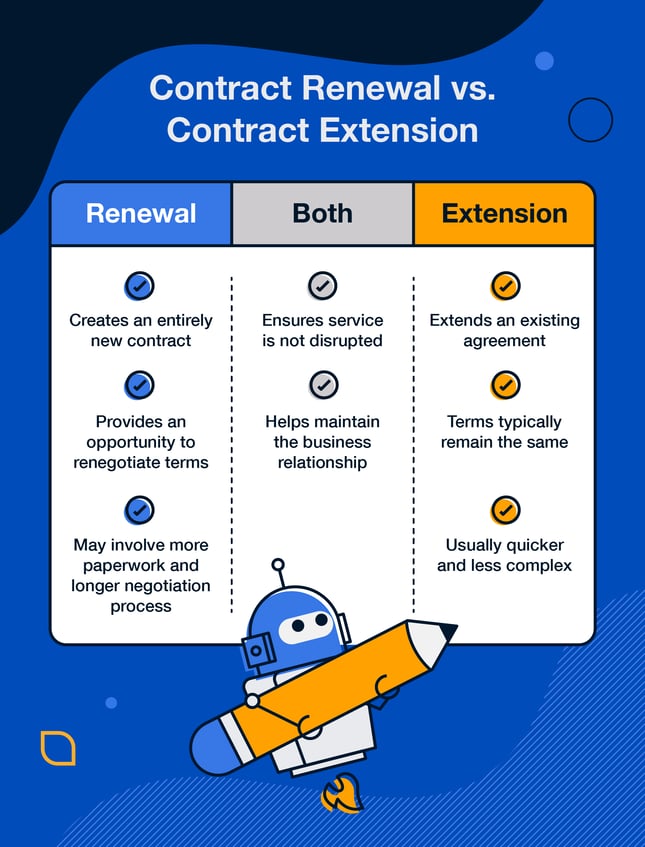
While both renewals and extensions allow you to continue a business relationship beyond the initial contract term, they work differently and offer different benefits.
A renewal typically involves creating a brand-new contract, potentially with updated terms to reflect your current needs. This offers maximum flexibility for renegotiating pricing, service levels, deliverables, or other aspects of the agreement.This option is ideal when pricing, scope, or risk allocation needs significant adjustment
A contract extension is essentially hitting "pause" and adding more time to your existing agreement. The original terms usually remain in place, making it simpler but less adaptable than a renewal for complex adjustments. Extensions are best for short-term continuity or when only timing—not terms—needs modification.
If all you need is a little extra time, a contract extension may be the right choice. If you’re looking to renegotiate terms or make significant changes to the contract, a renewal could be better.
What Are Automatic Contract Renewals?
Automatic contract renewals are precisely what they sound like: clauses within a contract that trigger an automatic renewal of the agreement.
Typically, the general terms of an agreement remain the same when a contract is renewed, but that’s not always the case.
Think of it like a subscription to an online newspaper. They always offer a teaser price to get you on board, but the subscription may renew at a much higher price. The same principle applies to SaaS, consulting, and service-based agreements.
That’s why impeccable contract renewal management is a must — to make sure your contract doesn’t automatically renew without knowing exactly how it will impact your business.
Today's AI tools can highlight renewal deadlines, notice periods, and “sneaky” auto-renewal language instantly—so you’re never blindsided by a contract quietly renewing itself at midnight.
Pros and Cons of Automatic Contract Renewals
Automatic renewals offer a mix of advantages and potential drawbacks.
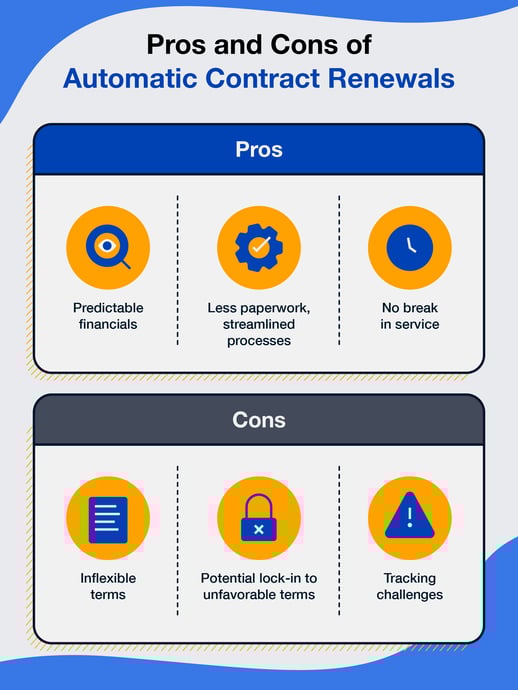 Benefits include:
- Convenience: Automatic renewals simplify the renewal process, saving time and eliminating the hassle of manual renegotiations.
- Predictable financials: Automatic renewals make it easy for vendors and their clients to plan revenue and expenses.
- Uninterrupted service: Automatic renewals prevent gaps in important services, ensuring continuous operations.
Drawbacks include:
- Potential lock-in: If you miss renewal deadlines, you could be stuck in a contract with unfavorable terms or a service you no longer need.
- Inflexible terms: Automatic renewals offer limited opportunity for adjusting terms unless you specifically opt out of the renewal clause beforehand.
- Tracking challenges: Managing various agreements with automatic renewals can become complex and requires meticulous tracking.
While automatic renewals have some advantages, it’s vital to carefully review your contracts to understand the associated deadlines and avoid surprises.
How To Get Out of an Auto-Renewal Contract
The key to escaping an auto-renewal contract lies in understanding the contract's specific terms and acting proactively.
Here's a step-by-step approach:
- Know your deadlines: Not only do you want to know when the contract renews, but you also want to find out how much, if any, notice is required if you intend to terminate the agreement.
- Submit written notice: The procedure you need to follow is usually outlined in the contract. It could be a formal written notice sent by email or certified mail.
- Be on time: Make sure you adhere to the notice period outlined in the contract. Submitting the notice late could result in penalties or even lock you into another term.
If you miss the notice window, the contract may renew automatically even if you communicated intent after the cutoff.
The best way to avoid unwanted auto-renewals is to proactively review your contracts, understand the renewal terms, and take action within the designated timeframe.
RELATED READ: Contract Lifecycle Management in 2025: How AI is Changing the Game
How To Manage Contract Renewals Effectively
Staying ahead of contract renewals isn't just good practice — it's vital for safeguarding your business from hidden costs, outdated terms, and missed opportunities. Effective renewal management blends date tracking, cross-team coordination, market intelligence, and negotiation planning.
Proactive management ensures you get the best possible terms and maintain continuity in the services your business relies on.
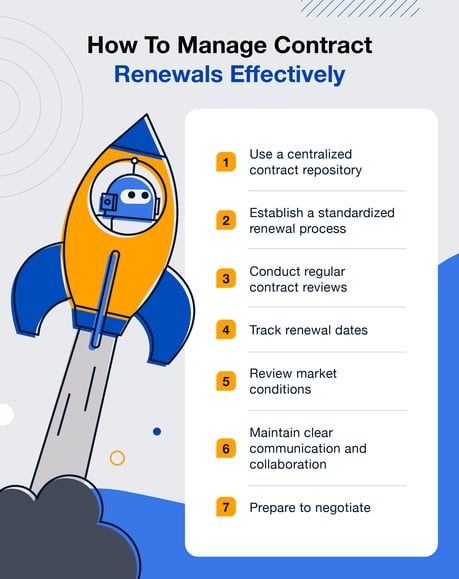
1. Use a Centralized Contract Repository
A disorganized and dispersed approach to storing contracts can lead to missed deadlines, confusion, and a lack of visibility into important contractual obligations.
To avoid these pitfalls, it’s essential to establish a centralized and organized system for contract management. A searchable repository with metadata fields for renewal dates, notice windows, and term lengths gives teams immediate visibility
Consider implementing a cloud-based contract lifecycle (CLM) management solution like ContractSafe that provides a single, secure location to store all your contracts.
A digital repository offers several benefits, including:
- Centralized access
- Enhanced security
- Improved collaboration
- Metadata management
- Scalability and flexibility
By establishing a centralized, cloud-based location for storing contracts, organizations can streamline contract management processes, reduce risks, and improve overall compliance.
AI-powered repositories can extract renewal dates, notice requirements, and key terms automatically—giving teams instant visibility without manual digging.
2. Establish a Standardized Renewal Process
Don't leave things to chance! A standardized process creates clarity and accountability.
Here are some tips to build your own process:
- Define who is responsible for staying on top of renewals.
- Set up automated reminders ahead of renewals.
- Establish timelines for review, negotiation, and approval phases.
- Outline documentation and legal review requirements.
With a standardized process, you can avoid surprises and ensure your contracts are working for you, not against you.
3. Conduct Regular Contract Reviews
Regular contract reviews are essential for several reasons.
First, they help prevent last-minute surprises. Reviewing contracts well in advance of renewal dates allows organizations to identify potential issues and take steps to address them, which can help avoid costly disruptions or legal disputes.
Second, contract reviews can help identify potential cost-saving opportunities. Taking a close look at a contract's terms and conditions will allow organizations to negotiate better rates or terms, which can result in significant savings over the contract's life.
Third, contract reviews can help ensure contracts align with evolving business needs. As businesses change, so do their needs. Regular contract reviews can help organizations make sure contracts are still meeting their current needs and that outdated terms or conditions aren’t holding them back.
Once you have completed the review process, take action to address any issues that you identified. This may involve renegotiating the contract, terminating the contract, or taking other steps to protect your organization's interests.
Reviews also ensure compliance with internal policies and external regulations (e.g., HIPAA, SOC2, data processing obligations).
4. Track Renewal Dates
Tracking contract renewal dates is the cornerstone of effective contract management.
Losing track of renewal dates can lead to costly auto-renewals, lock you into unfavorable terms, or even lead to disruptions in service.
It’s important to implement a system for tracking renewal dates. While a basic calendar might work for some, contract management software is the most effective solution.
Contract management software like ContractSafe will let you extract key data from your contracts and set up automated reminders to ensure you never miss a date.
Dashboards and automated alerts significantly reduce the administrative burden and prevent accidental evergreen renewals.
5. Review Market Conditions
Before renewing a contract, assess current market conditions for comparable services or products.
Compare pricing from other vendors and consult industry benchmarks to determine if current contract terms remain competitive.
Maybe prices have changed or there are new, better offerings on the market.
Staying informed helps you secure the best possible pricing and terms for your renewed agreement, whether you’re buying or selling.
This step is especially important for recurring services like software, maintenance, outsourced staffing, or consulting.
6. Maintain Clear Communication and Collaboration
Maintaining clear communication and collaboration among key stakeholders is crucial for a successful renewal process.
That means bringing everyone into the mix, including:
- Legal
- Procurement
- Finance
- Business operations
A contract management software like ContractSafe can help break down silos between teams by offering a single source of truth for all documents, as well as allowing stakeholders to add comments to contracts to ask questions or clarify clauses.
7. Prepare to Negotiate
Be ready to negotiate terms during the renewal process, especially if market conditions have changed or you seek adjustments to the contract.
Negotiation can result in improved pricing, favorable terms, or service level adjustments, maximizing the value of the renewed agreement.
It’s important to come prepared with data to support your negotiation points, determine your target outcomes, and develop a negotiation strategy.
RELATED READ: Top 6 Best Practices for Managing Contract Renewals Efficiently
Stay Ahead of Contract Renewals With ContractSafe
ContractSafe is a robust contract management solution focused on providing powerful tools that are easy to use and accessible for businesses of all sizes. ContractSafe automatically extracts key metadata—like renewal dates, notice clauses, and term details—so teams stay proactive instead of reactive.
With AI-powered data extraction, ContractSafe flags renewal deadlines, notice-period requirements, and critical contract terms the moment a document is uploaded. That means no more manual tracking, no more buried renewal language, and no more eleventh-hour surprises.
And with ContractSafe’s AI Chat + Smart Search with automatic OCR, there’s a lot less clicking and more just knowing. Use our chat to ask plain-English questions across your entire repository—“Which MSAs auto-renew in Q2?” “Show NDAs with unilateral termination.”—and get instant, actionable answers.
With ContractSafe, your business can stay ahead of renewal cycles and gain valuable insights into your contract portfolio’s performance, ensuring you always negotiate from a position of strength.
Want to see it in action? Schedule a demo today.







.svg)







.svg)